How A Job Runs · Hemet, CA
Six steps, first call to handoff.
What happens after you call, in the order it happens, so nothing about the next few days catches you off guard.
- IICRC Certified #70193059
- CSLB #1114551
- Hemet-based
- Serving all of Riverside County
Step 01: The call
A real person picks up, day or night. We ask what happened, what you're seeing, and whether anything looks unsafe, then tell you what to do and what not to touch until we get there. If it's an active loss we're dispatching while we're still on the phone.
Step 02: The inspection
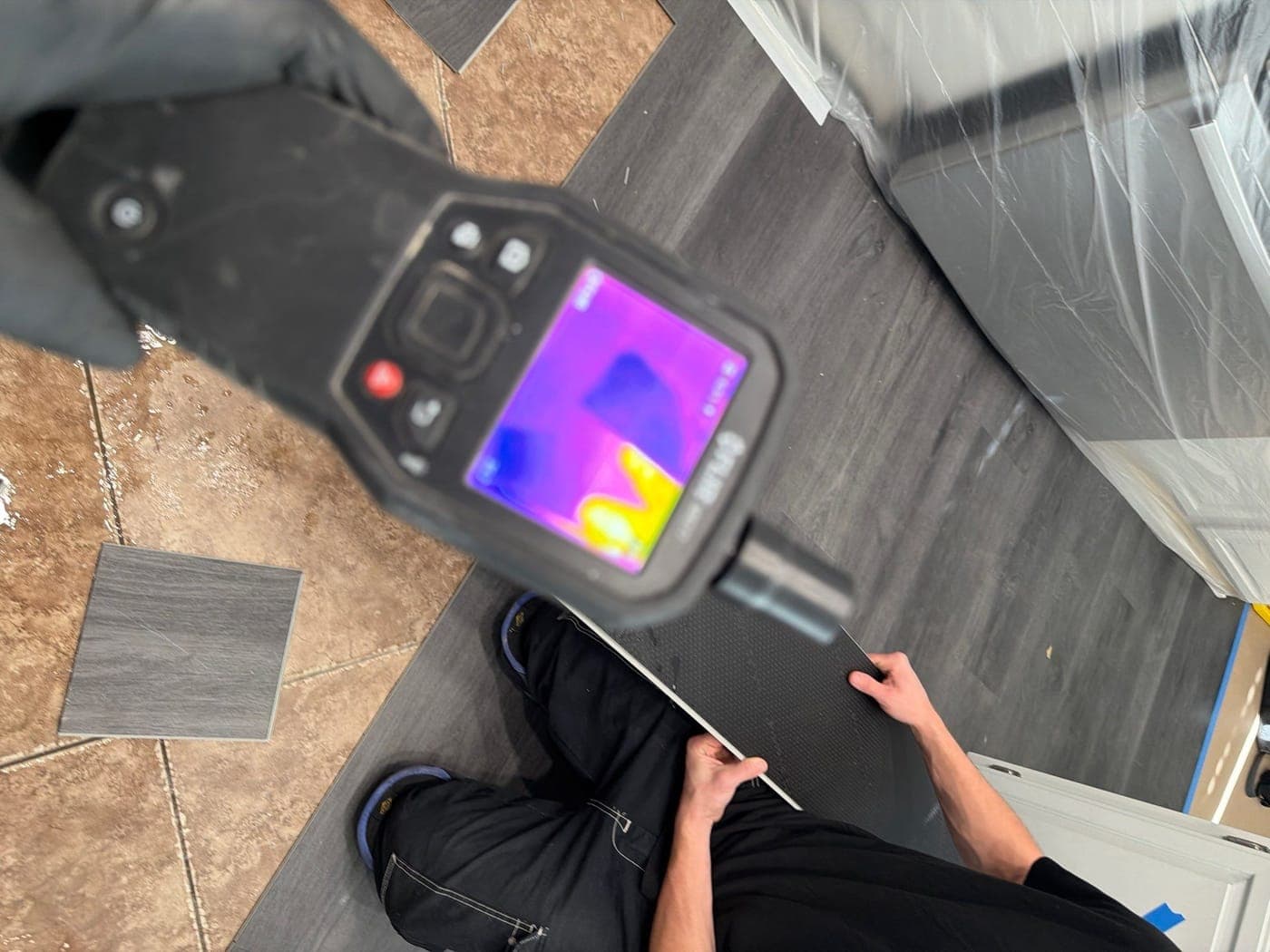
We establish how far it actually goes before quoting anything. Thermal imaging, moisture meters, and a walk of every affected room, because the damage you can see is rarely the whole of it. The inspection is free, and we explain what we found in plain language.
Step 03: Stabilize it
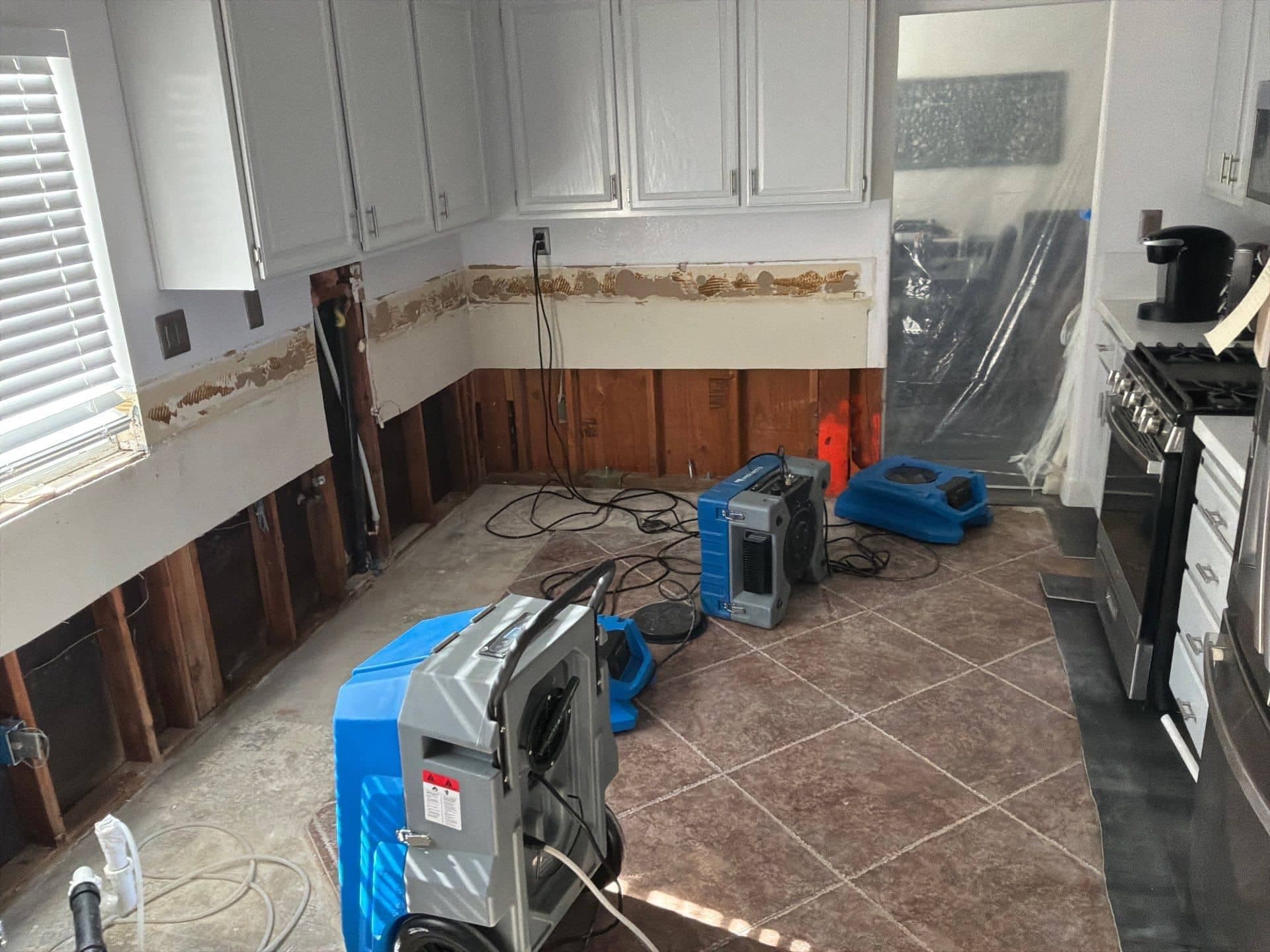
Whatever the damage, the first job is stopping it from getting worse. That looks different on every job — extracting water, sealing an opening, setting containment, protecting contents — but it always comes before anything else, and most policies expect it to start promptly.
Step 04: The work itself
This is where jobs diverge. Drying a water loss is a different job from removing soot or remediating mold, and each has its own sequence.
Step 05: Verified, not assumed
We finish to a measurement, not a calendar. On a water loss that means meter readings matching unaffected material in the same building. On mold it means containment stays up until the area is clear. The number decides when we leave, not the schedule.
Step 06: Handoff
You get the space back with the documentation complete. Resolve does mitigation, not the rebuild. Reconstruction goes to Iconic Floors & More Inc., the licensed California contractor Resolve operates under, or to your own contractor.
Documentation runs through every step.
Photographs, moisture mapping, measurements and a room-by-room record, captured before anything is torn out and updated every day the job runs, going directly to your insurance adjuster. Coverage decisions are made solely by your insurance company according to the terms of your policy.
More on what we document and whyOn The Truck
What we bring, and what it's for
Moisture meters and a thermal camera
These decide when we leave. We dry until the readings match unaffected material in the same house, not until a set number of days is up.
Air movers and dehumidifiers
They only work as a pair. Air movers lift moisture out of materials, the dehumidifier takes it out of the air. Running air movers on their own just moves damp air around.
Containment and HEPA air scrubbers
Sheeting, zipper doors, and negative air. On a sewage or mold job it isn't optional; without it you spread the problem into clean rooms.
Panel mats and cavity drying
For water under a wood floor or inside a wall, where nothing aimed at the surface will reach it. It's often the difference between drying a floor and replacing one.
Start With a Call
Step one is a phone call.
Free inspection, 24/7 response across Hemet and Riverside County. We handle the cleanup and document it for your insurer.