
Damage Resources · Water
There's water under my house, does it matter?
Yes, because that air ends up inside. Damp under a floor rises into the rooms above rather than staying put.
- IICRC Certified #70193059
- CSLB #1114551
- Hemet-based
- Serving all of Riverside County
Under The Floor
What you would notice
- A musty smell in the house that is strongest near floor vents or at floor level.
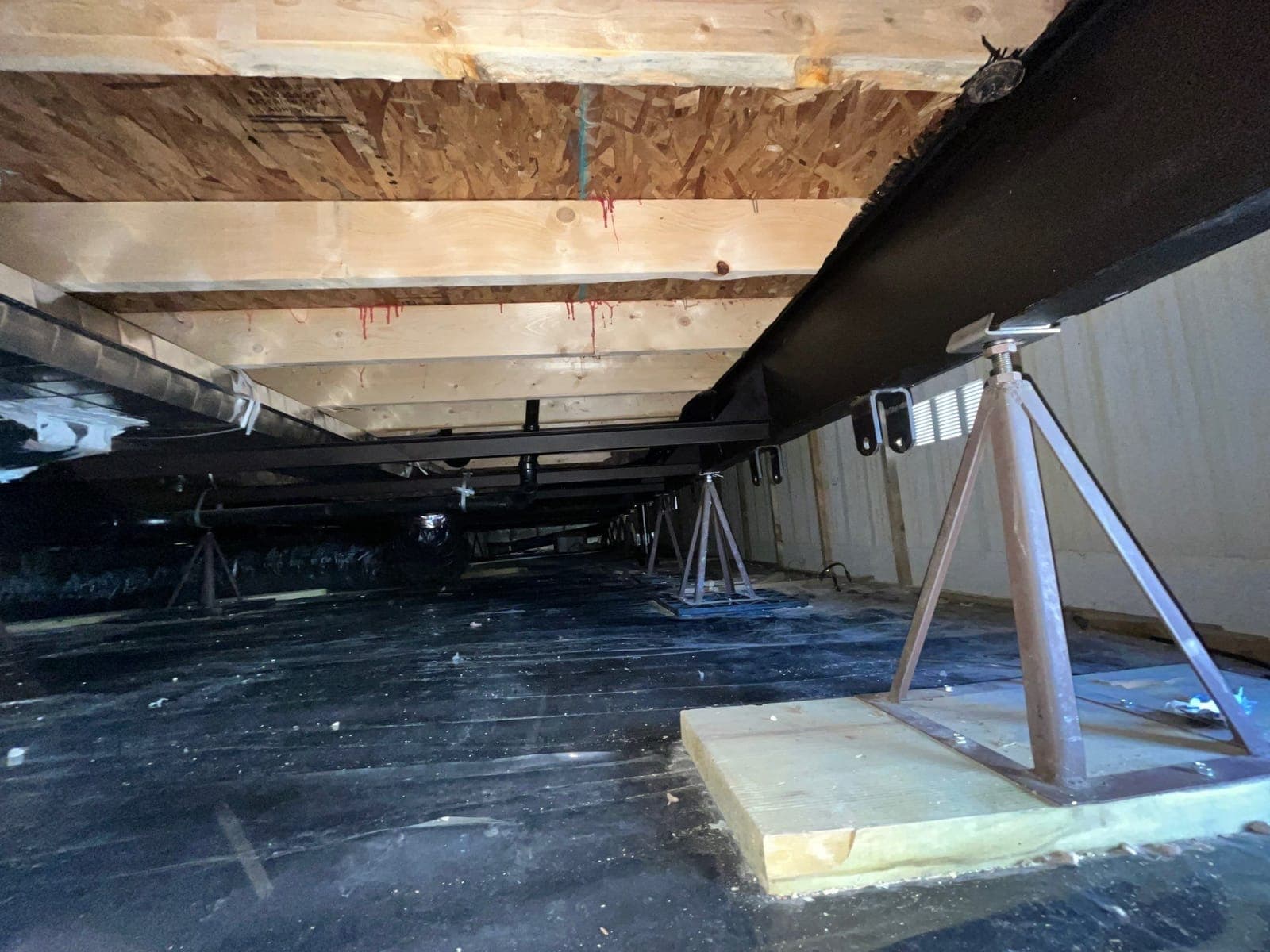
- Standing water or saturated soil visible from the access hatch.
- Insulation hanging down between the floor joists, or lying on the ground.
- Floors above feeling cool, damp, or starting to cup.
- On a manufactured home, a sagging belly wrap underneath, or a soft spot in the floor.
What's Actually Happening
The cause
Water gets under a raised floor from drainage that sends it toward the house instead of away, from irrigation, or from a plumbing line running through the space. Once it is there, the soil holds it and keeps releasing it as vapor.
That vapor is the actual problem. It condenses on the cooler framing above, wetting joists and subfloor from underneath, sagging the insulation until it falls, and corroding ductwork. Then the stack effect pulls that air upward into the living space, which is why the smell shows up in the house rather than under it. It is also a common cause of cupped wood floors, where the moisture is coming from below rather than from anything spilled on top.
One thing worth saying plainly: standing water that drains away within a day or two after heavy rain is a drainage warning. Water or saturated soil still there after that is actively feeding growth on the wood above it.
Do This Now
Do this in the next 30 minutes
A few careful moves protect your safety and limit the damage. If a step isn’t safe, skip it and call us.
- 1
Work out whether it is plumbing or weather
If it is plumbing, shut the house supply valve. If it arrived with the rain, the source is drainage and it will come back with the next storm.
- 2
Photograph it from the hatch, do not climb in
Get pictures from the opening. Do not go into standing water where wiring or ductwork is submerged, and do not go in at all if there is any chance of sewage.
- 3
Open the vents if there are any
Airflow helps a little while you wait. It will not dry saturated soil, but it slows things down.
- 4
Call if there is more than an inch or so standing
Below that, drainage and ventilation may handle it. Above that, it needs pumping out, and the wood above it needs checking either way.
Avoid These Mistakes
Don't do this
These are the moves that turn a manageable loss into a bigger, costlier one.
- Do not assume clear water is clean. Water that has come up through soil is treated as contaminated under the industry standard no matter how it looks.
- Do not crawl into standing water with electrical or ducting in it.
- Do not leave it to dry on its own. Soil holds moisture for weeks and keeps feeding it upward the whole time.
- Do not run the HVAC hard if the ducts are sitting in the water.
That smell in the house is coming from under it
Damp under a floor does not stay under the floor. Call and we'll get in, dry it, and tell you what caused it.
How We Handle It
What we do when we arrive
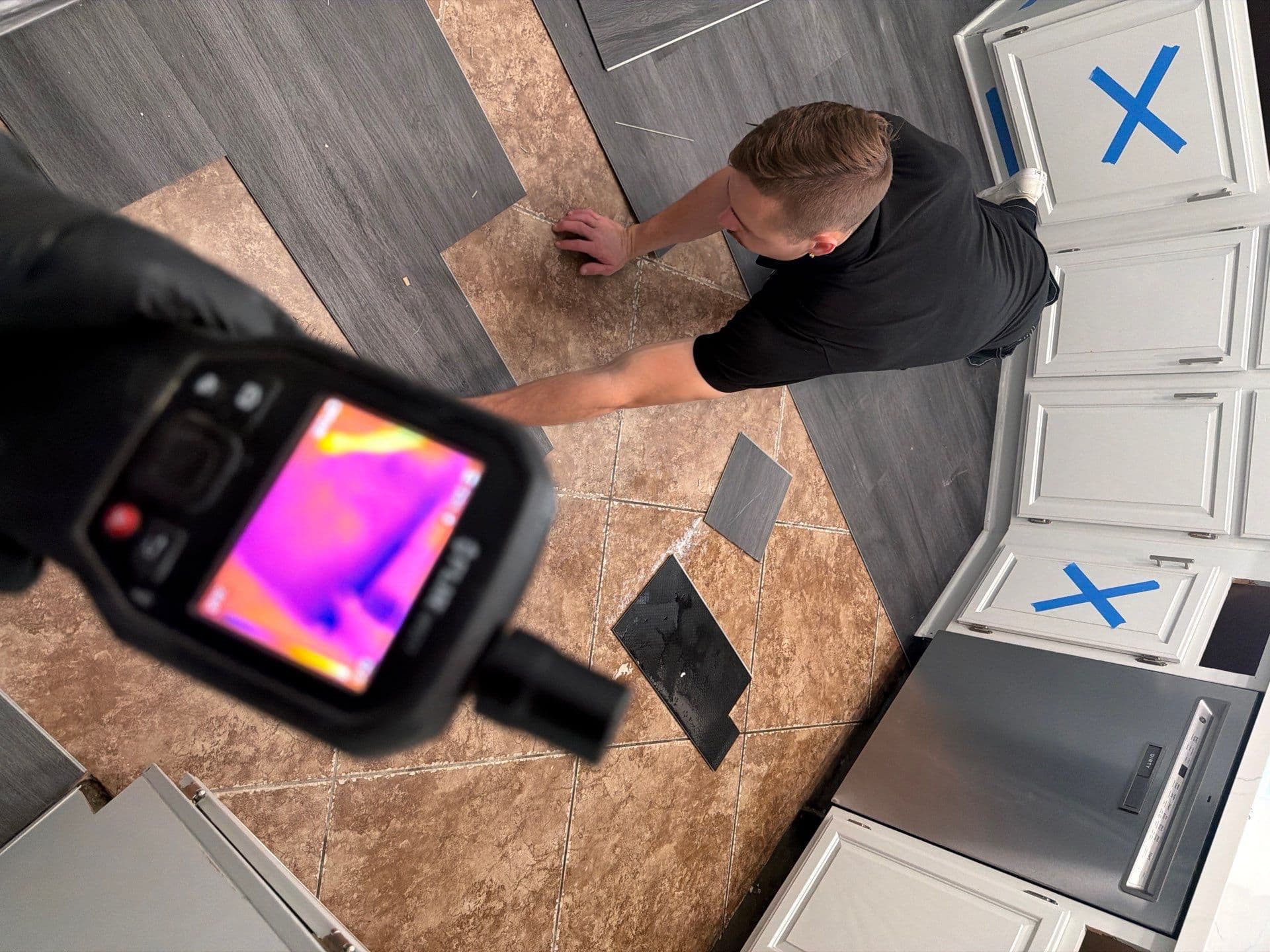
We pump out what is standing, remove fallen insulation and any silt-fouled ground sheeting, and then dry the space as a chamber rather than just blowing air around it.
The number that decides when it is done is the moisture content of the wood, taken with a probe meter rather than judged by feel. Healthy framing runs in the low to mid teens. Around sixteen percent is where mold becomes supportable, and around nineteen or twenty is where decay fungi become a concern, so the target is comfortably back below that and holding.
Where growth is already established on joists or the rim, that becomes a remediation job rather than a drying job: contained, HEPA-filtered, with porous materials removed rather than treated in place.
Then we replace the ground vapor barrier like for like, and we tell you honestly where our work ends.
That last point matters. Extraction, drying, treatment, insulation, and a replacement vapor barrier are restoration. Encapsulation, drains, sump systems, and regrading are moisture-management upgrades. They can be genuinely worth doing, but they are a separate job on a separate quote and are almost never an insurance item. We would rather say that than fold it into a claim.
Your Claim
When insurance covers it
The source decides this one more than the suddenness. A supply pipe that bursts under the house is the classic sudden and accidental loss, and the dry-out and resulting damage are commonly covered even though the pipe repair itself usually is not.
Groundwater, surface runoff, and seepage under a foundation are a different matter and are almost always excluded from a standard homeowners policy. That is the flood exclusion, and only a separate flood policy responds to it. Long-running damp under a house falls on the gradual side and is routinely declined. We document what we find and what we did; the coverage call is your carrier's.
Questions
Crawlspace & Under-Floor, frequently asked
Is water under the house normal after heavy rain?
A little, briefly, can be. If it drains away within a day or two it points at grading or drainage that needs attention. Water still sitting after that, or soil that stays saturated, is not normal and is wetting the wood above it the entire time.
Does this apply to a manufactured home?
Yes, and it is common around here. A manufactured home sits on piers with an under-floor space closed in by a belly wrap, and a plumbing leak up there behaves much like a crawlspace loss: the wrap holds the water, the insulation soaks, and the particleboard floor decking swells from below. It needs opening, draining, and drying rather than leaving to sort itself out.
Do I need encapsulation?
Possibly, but it is not part of drying out a loss and we will not sell it to you as though it were. Encapsulation seals the space and manages humidity long term. It is a genuine improvement for a chronically damp crawlspace and a separate quote. Restoration is getting the water out, drying the structure, and replacing what the water ruined.
Get Help Now
Request a free inspection
The Service That Handles This
Where We See It
Related Resources
24/7 Emergency Response
Damage won't wait. Neither do we.
Call now for a free inspection and 24/7 response across Hemet and Riverside County. We handle the cleanup and document it for your insurer.