
Damage Guides · Water
Why is my air conditioner leaking water?
Your AC pulls moisture out of the air, and when the drain for that water clogs or fails, it overflows, often into the ceiling or wall below.
- IICRC Certified #70193059
- CSLB #1114551
- Hemet-based
- Serving all of Riverside County
What You're Noticing
The signs
- A water stain spreading on the ceiling under an attic or upstairs air handler.
- Water pooling around the indoor unit, the furnace closet, or the base of the air handler.
- A full or overflowing drain pan under the unit.
- Damp drywall or a musty smell that shows up only in the hot months when the AC runs hard.
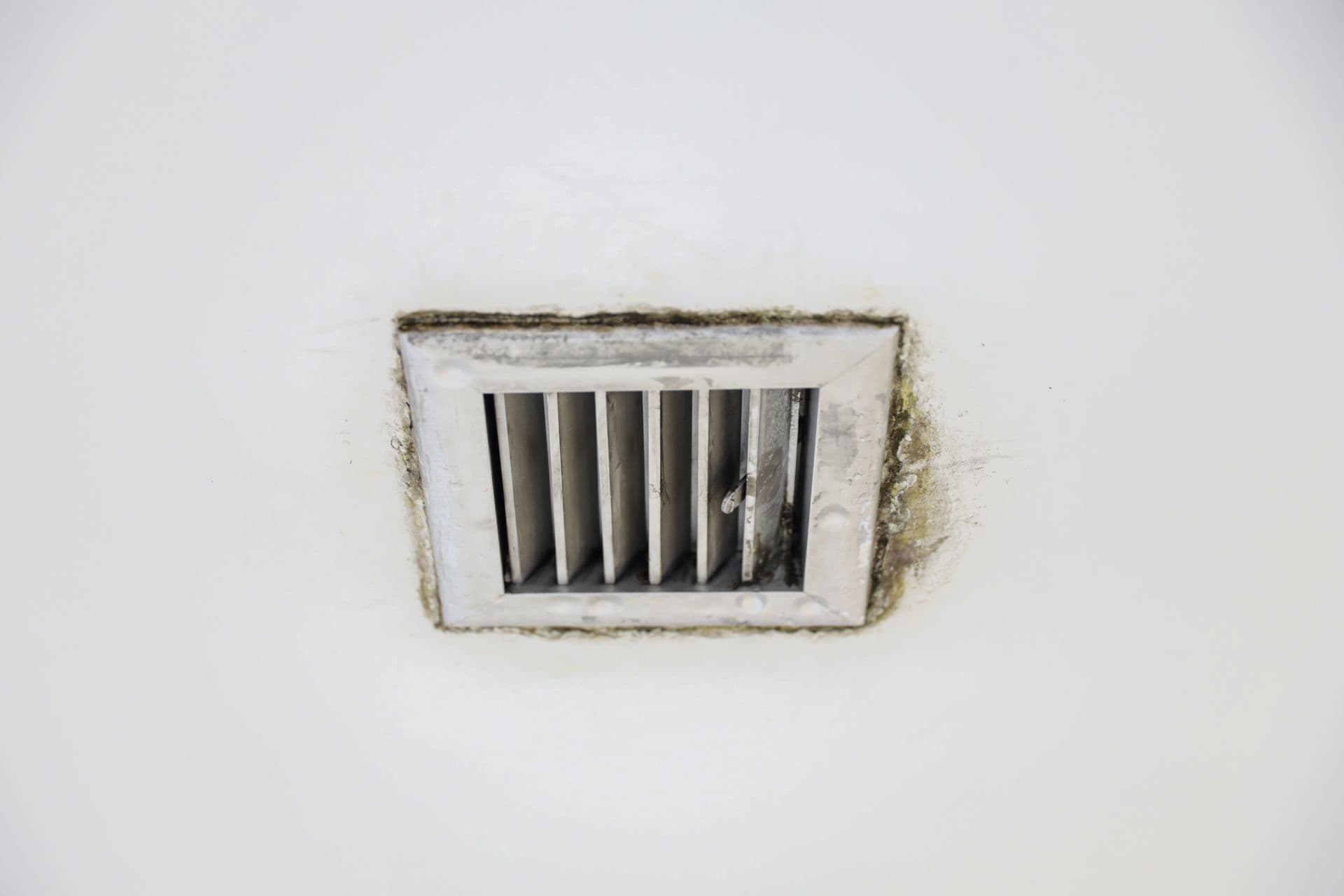
- Dripping from a ceiling vent or register during a long cooling cycle.
What's Actually Happening
The cause
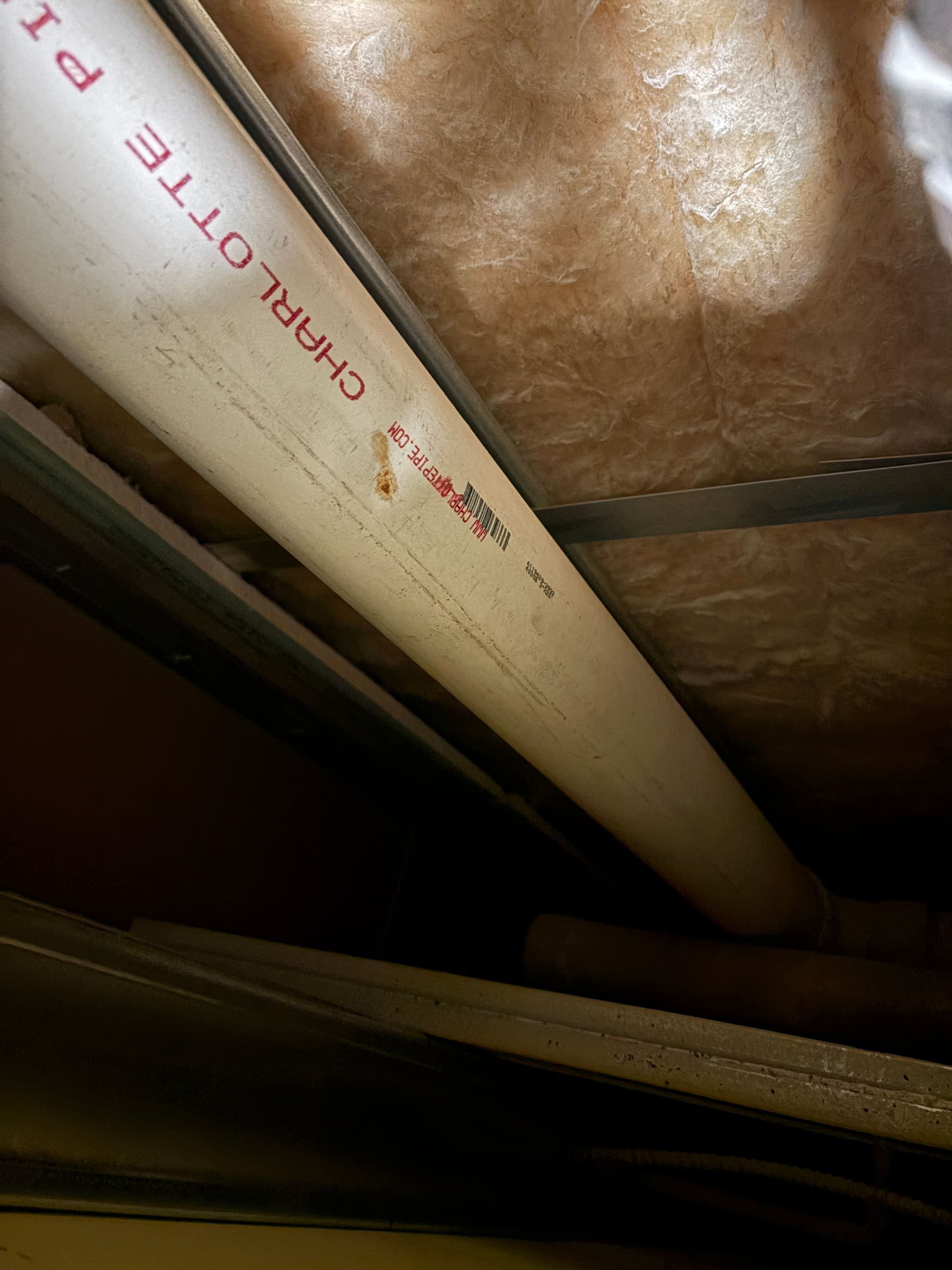
Air conditioning works by condensing moisture out of your indoor air. That water collects in a pan and drains away through a condensate line, a small PVC pipe running to the outside or a drain. Most people never think about that line until it clogs.
In the inland heat, units run for hours and produce a lot of condensate, and the line clogs with algae and gunk over a long season. When it backs up, the pan overflows. Attic and upstairs units are the worst offenders because the water has a ceiling to land on: a slow, steady drip that stains and soaks the drywall from above.
Do This Now
Do this in the next 30 minutes
A few careful moves protect your safety and limit the damage. If a step isn’t safe, skip it and call us.
- 1
Turn the system off at the thermostat
Shut the AC down so it stops making condensate. Every cooling cycle adds more water to a line that's already overflowing.
- 2
Empty the drain pan if you can reach it
If the pan under an attic or closet unit is full, sponge or vacuum it out so it stops spilling. Don't climb into an attic that has a wet, weakened ceiling below you.
- 3
Protect the room under the leak
Move furniture and electronics out from under the drip and set a bucket. If a ceiling light near the leak is involved, kill that breaker.
- 4
Photograph the unit, the pan, and the stain
Capture the overflowing pan, the wet area, and the ceiling stain before cleanup. It documents the source clearly.
Avoid These Mistakes
Don't do this
These are the moves that turn a manageable loss into a bigger, costlier one.
- Don't wipe the ceiling stain and keep running the AC. It fills right back up and keeps soaking the drywall.
- Don't walk on a wet, sagging attic ceiling to reach the unit.
- Don't pour bleach down a condensate line blind and assume it's cleared; a backed-up pan can still overflow.
- Don't leave soaked attic insulation over the leak; wet insulation holds moisture against the ceiling and grows mold.
AC leaking into the ceiling? Shut it off and call.
The drip keeps soaking the drywall every cycle. We'll dry it out and pin down how far it spread.
How We Handle It
What we do when we arrive
We separate the water problem from the AC problem. Moisture meters and thermal imaging show how far the condensate soaked into the ceiling, the wall, and any insulation, so we dry the wet area; an HVAC tech clears or reroutes the line itself.
Then we dry the ceiling cavity and framing to IICRC S500 targets with daily readings, remove saturated insulation that can't be dried, and leave the structure stable. Because the leak is slow and hidden, the drywall is often wetter than the stain suggests, which is exactly what the instruments catch.
Your Claim
When insurance covers it
Coverage for AC condensate leaks is genuinely mixed. A sudden overflow can be treated as a covered water loss, but many carriers view a clogged, un-maintained condensate line as gradual damage and push back. Policies differ a lot here.
We can't promise how yours will rule, but we document whether the damage reads as sudden or long-running, capture the source and the moisture readings, and give your adjuster a clear record to work from.
Prevention
How to Prevent AC Condensation Leaks
AC condensate leaks are maintenance failures rather than equipment failures. An annual line flush, on-schedule filter changes, a float switch on the drain pan, and attention to the secondary drain outlet prevent nearly every condensate overflow we are called to dry out.
- Flush the condensate line each spring. A cup of white vinegar keeps algae from plugging the drain during peak cooling season.
- Change filters on schedule. A restricted filter freezes the coil, and the thaw overwhelms the drain pan.
- Have a float switch installed. It shuts the system down automatically the moment the pan fails to drain.
- Watch the secondary drain outlet. Dripping from the secondary outlet means the primary line is already blocked.
Questions
AC Condensation Leak, frequently asked
Why does my AC only leak in summer?
Because that's when it runs hardest. Long cooling cycles in inland heat produce a lot of condensate, and a line partly clogged with algae backs up and overflows the pan. In mild weather the unit barely runs, so the leak hides.
Can an AC leak cause mold?
It can. A slow condensate leak keeps drywall and insulation damp for weeks, and materials that stay wet can grow mold within 24 to 48 hours. Attic and upstairs units are common sources of hidden mold for exactly this reason.
Do you fix the air conditioner too?
We handle the water damage, drying the ceiling, wall, and insulation and documenting it. Clearing or rerouting the condensate line and servicing the unit is an HVAC tech's job; we'll tell you what the drying found so that repair is straightforward.
Get Help Now
Request a free inspection
The Service That Handles This
Where We See It
Related Guides
24/7 Emergency Response
Damage won't wait. Neither do we.
Call now for a free inspection and 24/7 response across Hemet and Riverside County. We handle the cleanup and deal with your insurer.