
Damage Guides · Water
What does a water stain on the ceiling mean?
It means water reached the drywall from above, and what matters is whether the leak is still active or long since dried.
- IICRC Certified #70193059
- CSLB #1114551
- Hemet-based
- Serving all of Riverside County
What You're Noticing
The signs
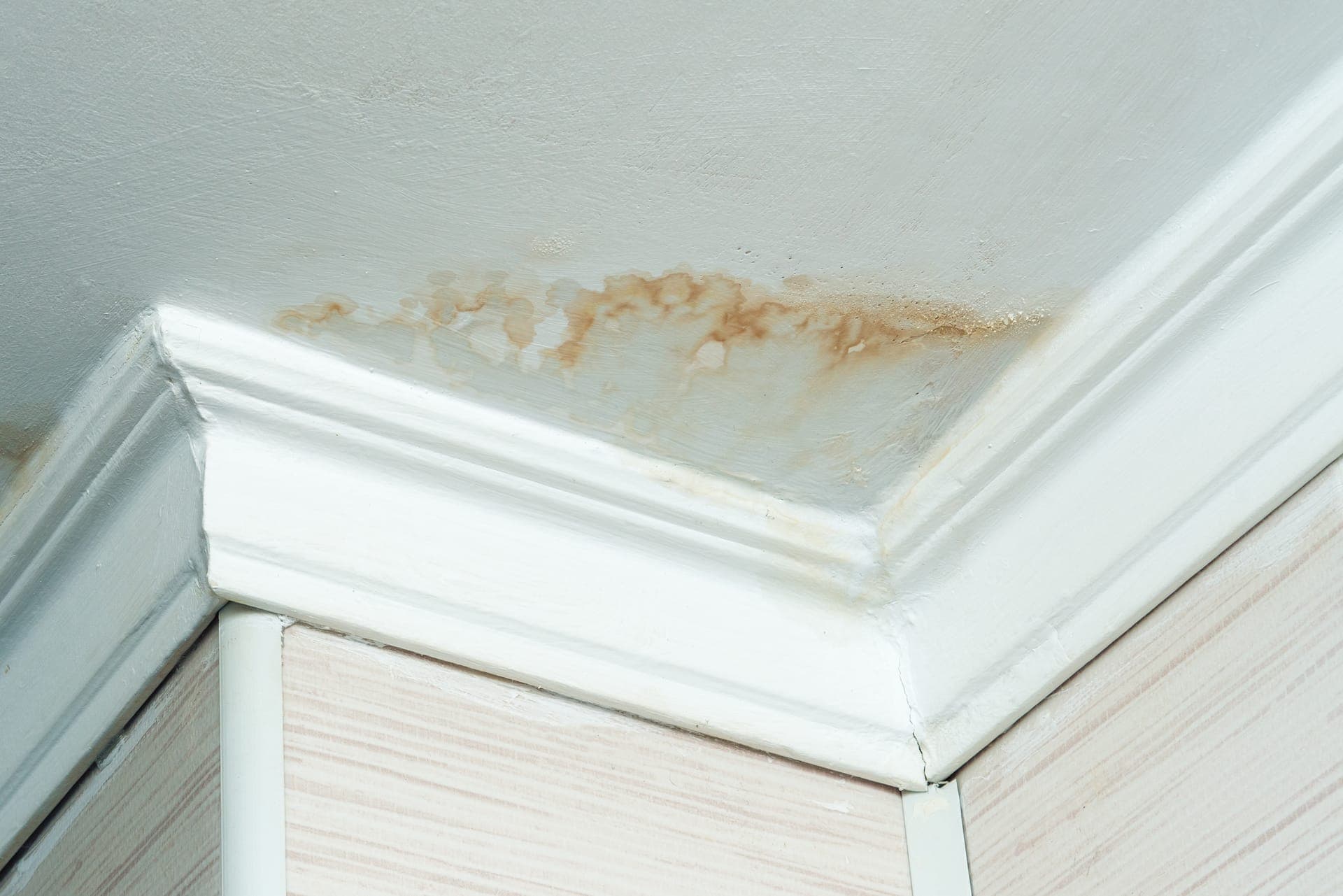
- A ring with a darker edge and a lighter center, the classic mark of water spreading and drying.
- A stain that's brown, tan, or coppery, sometimes with a faint yellow halo.
- A spot that feels cool and damp to the touch, or one that's bone-dry and hard.
- New rings forming inside the old ones after it rains or someone showers upstairs.
- A slight sag or a soft give when you press gently near the center, from the side.
What's Actually Happening
The cause
A ceiling stain means water reached the drywall at some point. Water traveled down from a roof, an attic line, or an upstairs bathroom, soaked into the paper face of the board, and left minerals behind as it dried. The ring marks where the wet edge sat while the water evaporated.
The question is whether it's still happening. An old, one-time stain is dry, hard, and unchanged month to month. An active leak looks damp, grows, or throws new rings after rain or a shower overhead, and that one needs the source found before the drywall gives out.
Do This Now
Do this in the next 30 minutes
A few careful moves protect your safety and limit the damage. If a step isn’t safe, skip it and call us.
- 1
Feel the stain and note the date
Press the edge gently. Damp, soft, or cool suggests it's active; dry and hard usually means old. Take a dated photo so next week you can tell whether it's growing.
- 2
Run the water upstairs and watch
If there's a bathroom or laundry above, run it briefly and watch the stain. A fresh bloom points right at the source; nothing after a good soak points more toward the roof.
- 3
Keep weight and people off it
Don't set anything heavy in the attic above a soft spot, and keep people out from under a sag. Wet drywall loses strength quickly.
- 4
Photograph it before any repair
Capture the ring, any sag, and the room from a few angles. If it becomes a claim, that early record is worth having.
Avoid These Mistakes
Don't do this
These are the moves that turn a manageable loss into a bigger, costlier one.
- Don't paint or stain-block over an active leak. It hides the problem and the ring bleeds back through.
- Don't assume a stain is old just because the surface looks dry; the cavity above can still be wet.
- Don't cut a hole in the middle of a sagging ceiling to drain it while standing underneath.
- Don't ignore new rings after rain. That's the ceiling telling you the roof or a line is still letting water in.
Not sure if that ceiling stain is still leaking?
We'll read the drywall and the cavity above and tell you straight, active leak or old mark. Call any hour.
How We Handle It
What we do when we arrive
We settle the active-or-old question with instruments, not a guess. A moisture meter and thermal camera read the drywall and the cavity above, so we know whether there's still water up there and how far it spread from the stain you can see.
If it's wet, we find the source, contain the area, and dry the cavity and framing to IICRC S500 targets with daily readings. If it's an old, dry stain, we'll tell you. Sometimes the answer is a cosmetic repair, not a dry-out.
Your Claim
When insurance covers it
When the stain comes from a sudden event, a supply line that let go upstairs or a storm that opened the roof, the water damage is commonly treated as a covered loss. Carriers look for the trigger being abrupt.
A stain from a slow roof leak or a fixture that dripped for months is the harder case, and long-term seepage is often excluded. We can't decide your claim, but we document whether it reads as active or old and share that record with your adjuster.
Prevention
How to Prevent Ceiling Water Stains from Returning
A ceiling stain returns when its source was never confirmed. Documenting the stain with dated photos, clearing the AC condensate line each spring, maintaining roof flashing, and repainting only after the source is verified fixed keep a repaired ceiling from staining again.
- Photograph the stain with a date. Comparing monthly photos shows immediately whether the stain is historic or active.
- Clear the AC condensate line each spring. A clogged condensate line is the most common cause of unexplained ceiling stains in this valley.
- Schedule roof maintenance every few years. Flashing and penetrations fail long before the shingle field does.
- Repaint only after the source is verified. Paint applied over an active leak conceals the damage while moisture continues to spread.
Questions
Ceiling Water Stain, frequently asked
How can I tell if a ceiling stain is old or new?
Feel it and watch it. A damp, soft, or growing stain, especially one that blooms after rain or a shower upstairs, is active. A stain that's dry, hard, and unchanged for weeks is usually old. A moisture meter settles it for certain.
Is a water stain on the ceiling dangerous?
The stain itself isn't, but what's behind it can be. A wet cavity can grow mold within 24 to 48 hours, and a saturated ceiling can sag or fall. An old, dry stain is mainly cosmetic, the trick is knowing which you have.
Can you just paint over it?
Only if it's confirmed dry and the leak is fixed. Painting over an active leak traps moisture and the ring bleeds back through. We check that it's truly dry before anyone talks about cosmetics.
Get Help Now
Request a free inspection
The Service That Handles This
Where We See It
Related Guides
24/7 Emergency Response
Damage won't wait. Neither do we.
Call now for a free inspection and 24/7 response across Hemet and Riverside County. We handle the cleanup and deal with your insurer.