
Damage Guides · Water
How long does water damage drying take?
For most homes it's about three to five days of monitored drying, but it comes down to "until the meter says dry," not a fixed number.
- IICRC Certified #70193059
- CSLB #1114551
- Hemet-based
- Serving all of Riverside County
What Drying Looks Like
On the job
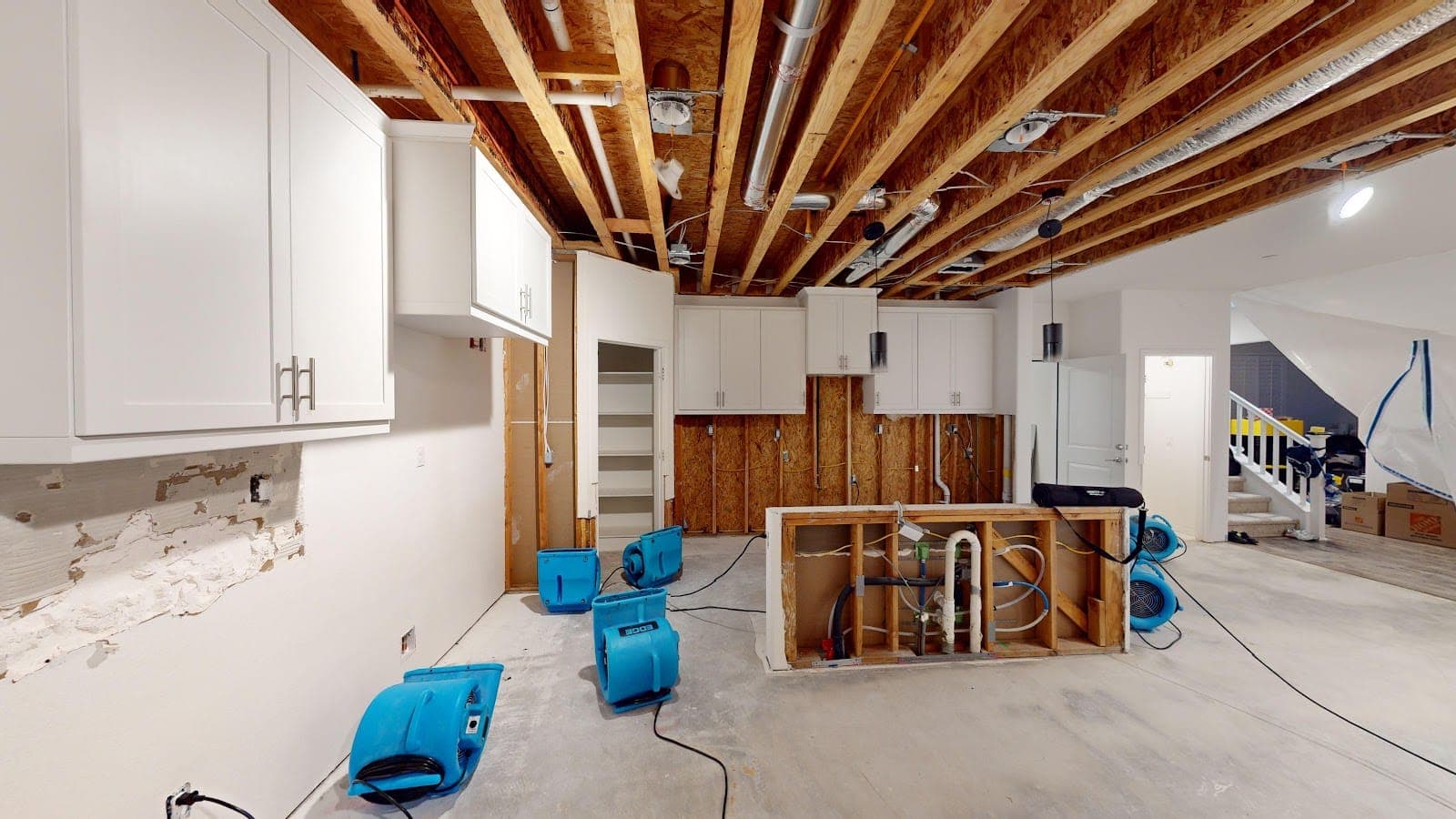
- Air movers aimed low along the walls and floor, running around the clock.
- One or more dehumidifiers pulling water out of the air, with a hose to a drain.
- Sections of baseboard or drywall opened up so the cavities can dry.
- A tech stopping by daily to take meter readings and log them.
- The affected rooms feeling warm and a little loud while the equipment runs.
What Those Days Are Doing
Why it takes that long
Drying is done when the materials hit their dry standard and the meter readings prove it, not after a set number of days. Water hides in framing, subfloor, and wall cavities, and those dense materials give up moisture slowly.
How long that takes depends on how much water there was, how long it sat before drying started, what got wet (drywall dries faster than hardwood or a slab), and the airflow and humidity we can hold. A small, fresh clean-water loss can be done in a couple of days; a saturated hardwood floor or a slab runs longer.
Do This Now
Do this in the next 30 minutes
A few careful moves protect your safety and limit the damage. If a step isn’t safe, skip it and call us.
- 1
Call fast: the clock is the biggest factor
The single thing that shortens drying is starting sooner. Water extracted and set up for drying within hours dries far quicker than water that sat for days.
- 2
Leave the equipment running
Air movers and dehumidifiers work best nonstop. Shutting them off overnight to cut the noise stretches the whole job out and can let mold get a foothold.
- 3
Keep windows and doors shut
In the heat it's tempting to open up, but the dehumidifiers control humidity better in a closed space. Opening windows usually slows drying, not speeds it.
- 4
Don't move or unplug the gear
The placement is deliberate, angled to sweep the wet surfaces. Shifting a fan or unplugging a dehumidifier leaves a wet spot that resets that area's clock.
Avoid These Mistakes
Don't do this
These are the moves that turn a manageable loss into a bigger, costlier one.
- Don't shut the equipment off at night; stop-start drying drags the timeline out and invites mold.
- Don't seal up or paint a wall because the surface feels dry; the cavity behind it can still be wet.
- Don't rush to reinstall flooring or baseboards before the readings confirm the structure is dry.
- Don't judge "dry" by touch; only a moisture meter against a target tells you it's dry.
Wondering how long your dry-out will take?
Call and we'll assess the loss, set drying targets, and give you a timeline, then monitor it daily until it hits target.
How We Handle It
What we do when we arrive
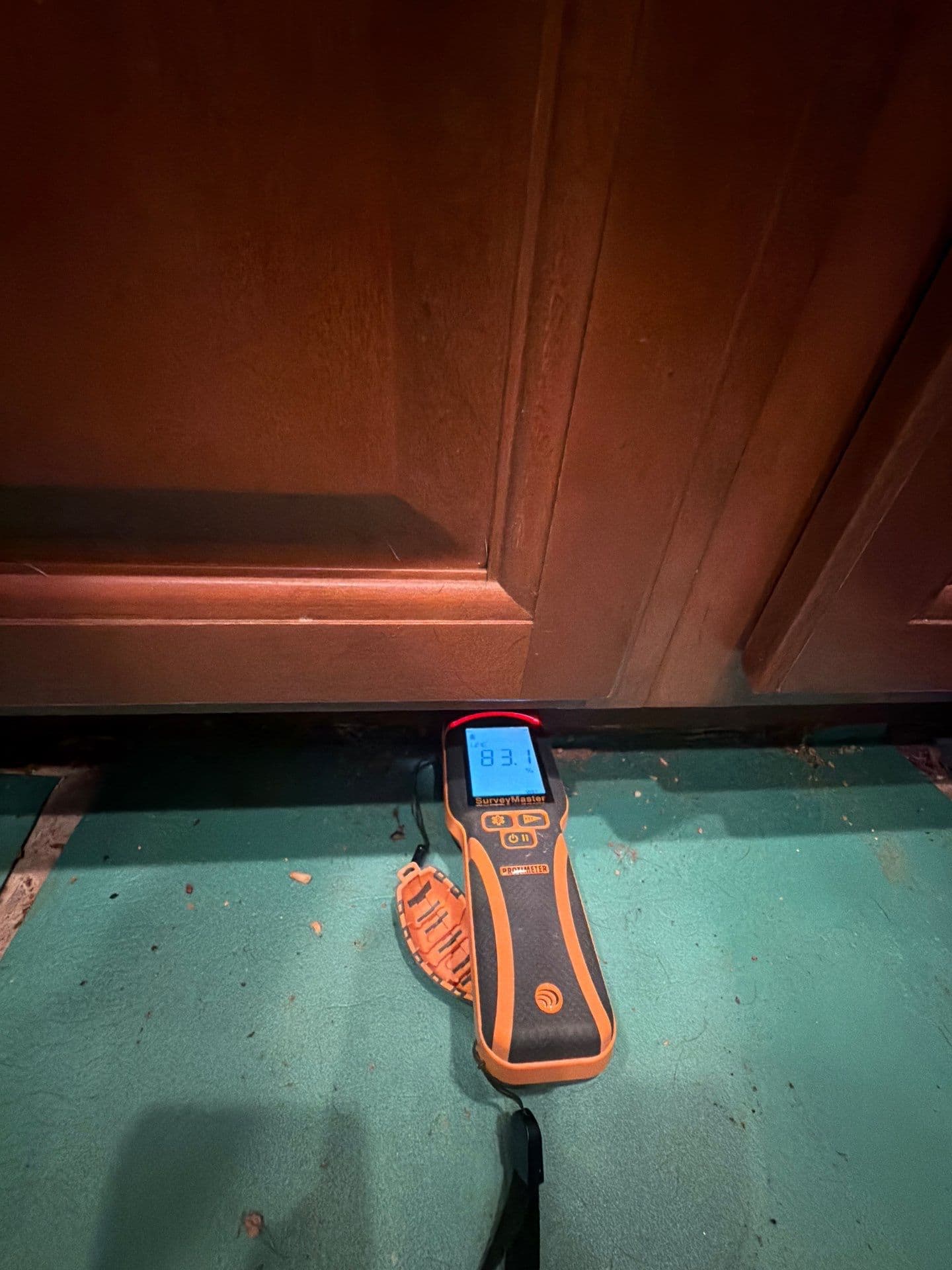
On day one we take moisture readings to establish targets based on IICRC S500, the dry standard for that material in that home, then place air movers and dehumidifiers to hit them as efficiently as possible.
Every day we come back, take fresh readings, and log them. When the numbers reach target, drying is done, and the logged readings prove it. That daily monitoring also flags early if a hidden pocket needs more attention.
Prevention
How to Make Structural Drying Go Faster
Drying time is set by how long water soaked in and how consistently equipment runs. Calling within the first hour, keeping power on, leaving equipment running around the clock, and leaving demolition to the crew all shorten the dry-out measurably.
- Call within the first hour. Water extracted before it saturates framing can cut days from the drying schedule.
- Keep the equipment running continuously. Shutting fans down overnight extends the dry-out by days, not hours.
- Maintain power and keep the house closed up. Drying equipment needs electricity and controlled interior conditions to hold its targets.
- Leave demolition to the crew. Opening the wrong assembly releases moisture into rooms that were holding dry.
Questions
How Long Drying Takes, frequently asked
Why does drying take three to five days and not one?
Because water soaks into dense materials (framing, subfloor, drywall, slab) that release it slowly even with equipment running around the clock. Three to five days is typical for monitored structural drying, but the endpoint is when materials hit their IICRC S500 dry target.
Can you speed it up?
The biggest lever is starting early; water dried within hours goes much faster than water that sat. Beyond that, running the equipment nonstop and keeping the space closed helps. We size the equipment to the loss so it dries as fast as the materials allow.
How do you know when it's dry?
We take daily moisture readings and compare them to a target set for each material. When the numbers reach that target, it's dry, and we have the logged readings to show it. Touch and appearance aren't reliable; the meter is.
Get Help Now
Request a free inspection
The Service That Handles This
Where We See It
Related Guides
24/7 Emergency Response
Damage won't wait. Neither do we.
Call now for a free inspection and 24/7 response across Hemet and Riverside County. We handle the cleanup and deal with your insurer.