
Damage Guides · Water
My ceiling is stained and sagging, what do I do?
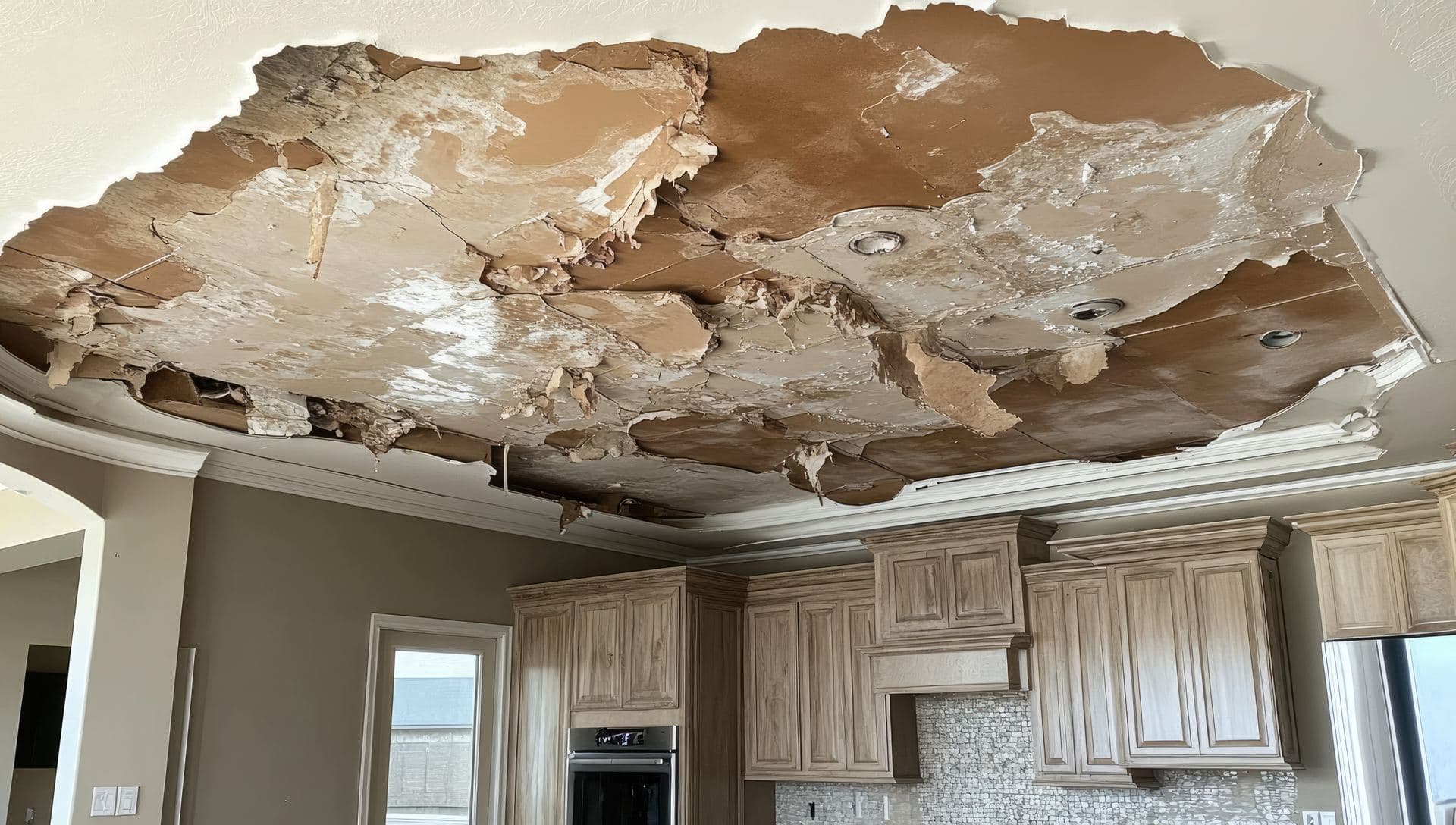
Water from above has soaked the ceiling, from an upstairs leak or the roof, and it is now showing as a stain or a bulge.
- IICRC Certified #70193059
- CSLB #1114551
- Hemet-based
- Serving all of Riverside County
What You're Noticing
The signs
- A brown or yellow ring on the ceiling that's bigger than it was last week.
- Paint that's bubbling, blistering, or flaking in one spot overhead.
- A soft bulge or sag that droops downward, sometimes with a bead of water on it.
- Drips or a wet patch that show up during or right after rain.
- A damp, musty smell in the room under an upstairs bathroom.
What's Actually Happening
The cause
The water is coming from somewhere higher up. In a two-story home it's often an upstairs bathroom, a shower pan, a washer hose, or a supply line that failed and dropped water onto the ceiling below.
In a single-story house or after a storm, the culprit is usually the roof: a lifted shingle, a bad flashing, or wind-driven rain finding its way into the attic and running down to the ceiling. A bulge that hangs down means water is pooling above the drywall, and a saturated ceiling can let go without much notice.
Do This Now
Do this in the next 30 minutes
A few careful moves protect your safety and limit the damage. If a step isn’t safe, skip it and call us.
- 1
Stay out from under a sagging bulge
A ceiling holding water is heavy and can collapse. Keep people and pets clear of any drooping or bulging area, and don't stand under it to look up.
- 2
Stop the water at the source
If the leak is coming from an upstairs fixture, shut off that fixture's valve or the main. If it's the roof in a storm, there's nothing safe to do up there. Leave the roof alone.
- 3
Catch drips and protect the room below
Set a bucket under active drips and move furniture and electronics out of the area. If a light fixture in that ceiling is dripping, kill that circuit at the breaker first.
- 4
Take photos before anything is cleaned up
Capture the stain, the bulge, and any wet belongings from a few angles. That record helps your claim and shows how far the water reached.
Avoid These Mistakes
Don't do this
These are the moves that turn a manageable loss into a bigger, costlier one.
- Don't paint or spackle over the stain. It hides an active leak and comes back darker.
- Don't poke a sagging bulge to "let it drain" while standing under it; a saturated ceiling can drop all at once.
- Don't leave a light or fan running on a circuit under the wet area. Kill that breaker first.
- Don't assume it dried because the surface looks dry; the cavity and framing above hold water you can't see.
A ceiling holding water won't wait.
Stay clear of the bulge and call. We'll find the source, dry the cavity, and document it for your claim.
How We Handle It
What we do when we arrive
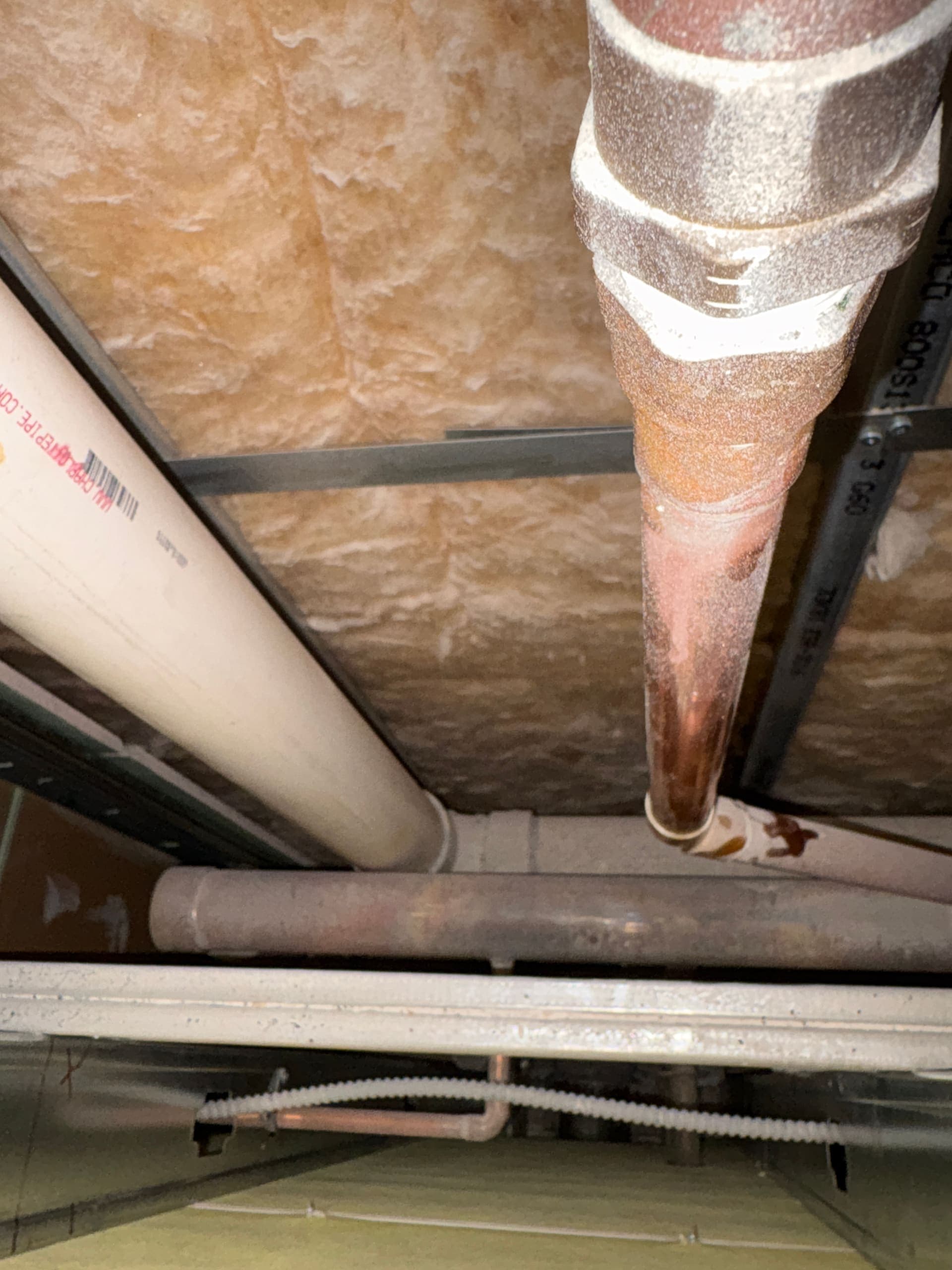
We trace the water back to its source and check how far it traveled inside the ceiling and walls. Thermal imaging and moisture meters show us the hidden wet zone, so we contain the mess and open only what needs to come out to dry.
From there it's controlled drying. Air movers and LGR dehumidifiers bring the ceiling cavity and framing down to IICRC S500 targets, and we document a reading every day until it verifies dry. You're left with a safe, dried-out structure ready for the repair.
Your Claim
When insurance covers it
A sudden event (a burst supply line upstairs, a failed shower pan, or a storm that tore an opening in the roof) is commonly treated as a covered loss, including the water damage to the ceiling below.
The gray area is a roof or fixture that was leaking slowly for a long time, or wear the homeowner knew about and didn't address. We can't guarantee how a carrier decides, but we photograph the full scope and record the drying so your adjuster has a clear picture to work from.
Prevention
How to Prevent Ceiling Water Damage
Ceiling water damage almost always starts at the roof, an upstairs bathroom, or an attic line. Seasonal roof inspections, clear gutters, sound caulk lines, and a quick attic check after the first heavy rain prevent the majority of the ceiling losses we dry out.
- Inspect the roof every fall and after wind events. Lifted shingles and cracked flashing are inexpensive repairs while dry and major losses once saturated.
- Keep gutters and downspouts clear. Blocked drainage forces storm water under roof edges and into ceiling cavities.
- Recaulk upstairs tubs and showers annually. A failed caulk line, not a burst pipe, is the most common source of the ceiling stains we trace.
- Check the attic after the first heavy rain of the season. Ten minutes with a flashlight identifies leaks months before the ceiling shows them.
Questions
Ceiling Water Damage, frequently asked
Is a sagging ceiling dangerous?
It can be. Saturated drywall gets heavy and may collapse, so stay clear of any bulge. Beyond the safety issue, mold can start within 24 to 48 hours in a wet ceiling cavity, so quick drying matters.
Can the ceiling be dried without tearing it all out?
Sometimes. If we reach it early and the drywall is sound, controlled drying can save it. When a section is saturated or sagging, that part usually has to come out so the cavity can dry to standard.
How long does a ceiling take to dry?
Structural drying typically runs three to five days depending on saturation and airflow. We confirm the cavity and framing hit their IICRC S500 targets with meter readings before we finish.
Get Help Now
Request a free inspection
The Service That Handles This
Where We See It
Related Guides
24/7 Emergency Response
Damage won't wait. Neither do we.
Call now for a free inspection and 24/7 response across Hemet and Riverside County. We handle the cleanup and deal with your insurer.