
Damage Guides · Water
A pipe burst and water's everywhere, what now?
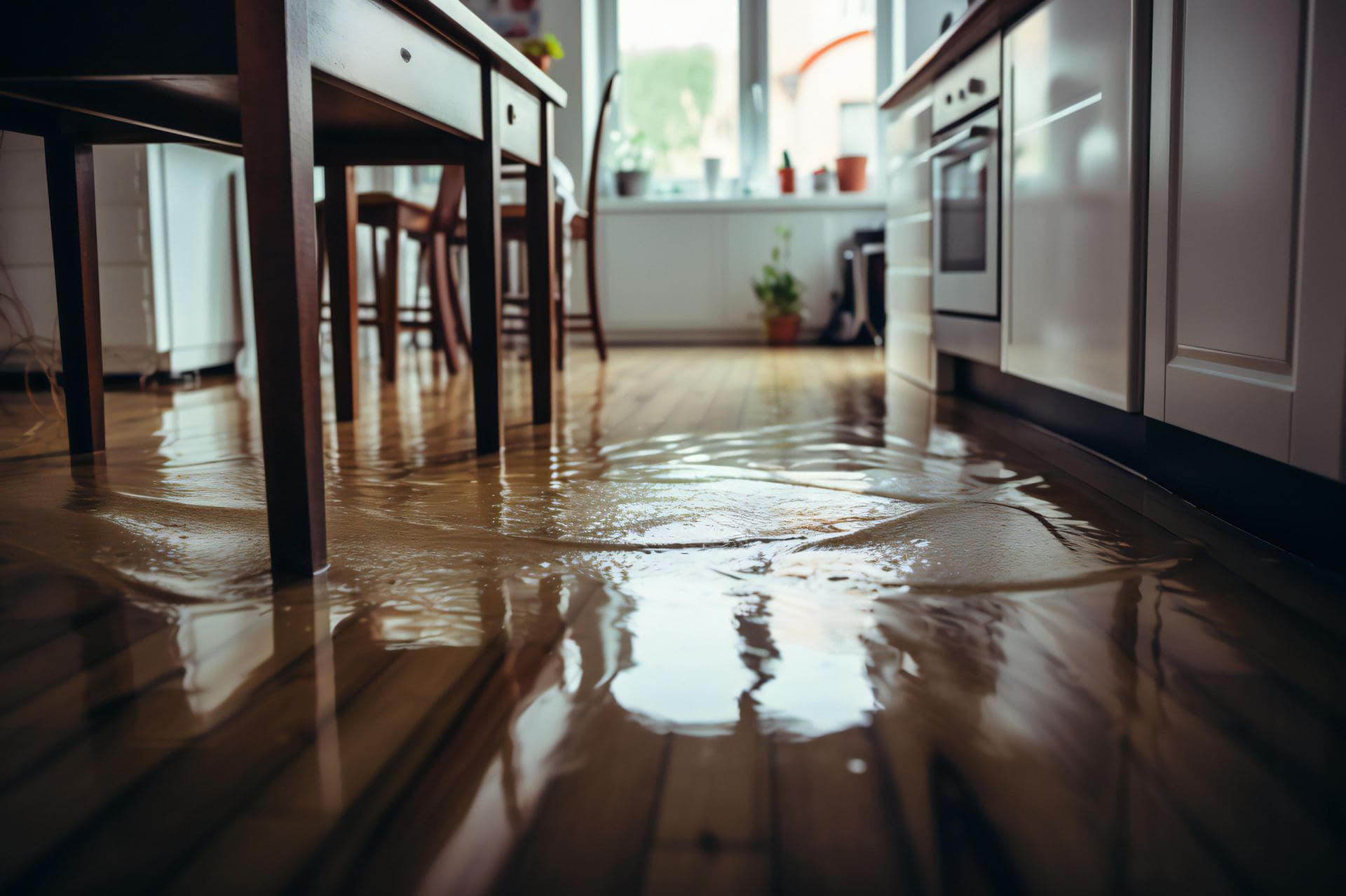
A pipe or supply line split and is flooding the space. First stop the water, then dry everything it touched.
- IICRC Certified #70193059
- CSLB #1114551
- Hemet-based
- Serving all of Riverside County
What You're Noticing
The signs
- Water spreading fast across the floor, down a wall, or spraying from a fitting.
- A sudden drop in water pressure, or a knock and hiss in the walls.
- Soaked carpet, baseboards, and cabinet toe-kicks within minutes, not hours.
- A dark line of moisture wicking up the drywall above the floor.
What's Actually Happening
The cause
A supply line under pressure fails when it corrodes, freezes, gets overtightened, or simply ages out. Braided washer hoses, under-sink lines, and old fittings are frequent offenders.
When one lets go, the line keeps pushing water at full house pressure until the supply is shut off, which is why a single failed fitting can put gallons on the floor in minutes. Even after the flow stops, water wicks up drywall and down into the subfloor, so the puddle you see is only part of what got wet.
Do This Now
Do this in the next 30 minutes
A few careful moves protect your safety and limit the damage. If a step isn’t safe, skip it and call us.
- 1
Shut off the main water valve now
This is the first move. Close the main shutoff at the house or the street to stop the flow. Every minute it stays open puts more water into your floors and walls.
- 2
Kill the power if water is near electrical
If water has reached outlets, appliances, or a panel, do not wade in. Shut off the affected circuits at the breaker, or stay out entirely and let a pro handle it if the panel itself is wet.
- 3
Get belongings up and out of the water
Lift furniture, electronics, and boxes onto dry ground. Don't drape a soaked rug over hardwood. It traps water against the wood and warps it.
- 4
Photograph the scene before cleanup
Snap photos and video of the standing water and everything it reached before you start mopping. That documentation supports your claim.
Avoid These Mistakes
Don't do this
These are the moves that turn a manageable loss into a bigger, costlier one.
- Don't wade into standing water that's reached outlets, appliances, or the panel. Kill the power or stay out.
- Don't stop at mopping the surface; water is already inside the subfloor and wall cavities.
- Don't run a shop vac over standing water near a live outlet.
- Don't start ripping out wet carpet and drywall before you've photographed everything for the claim.
Water's out, but is your house dry?
Mopping doesn't reach the moisture trapped in the structure. Call and we'll dry it to the studs, on the record.
How We Handle It
What we do when we arrive
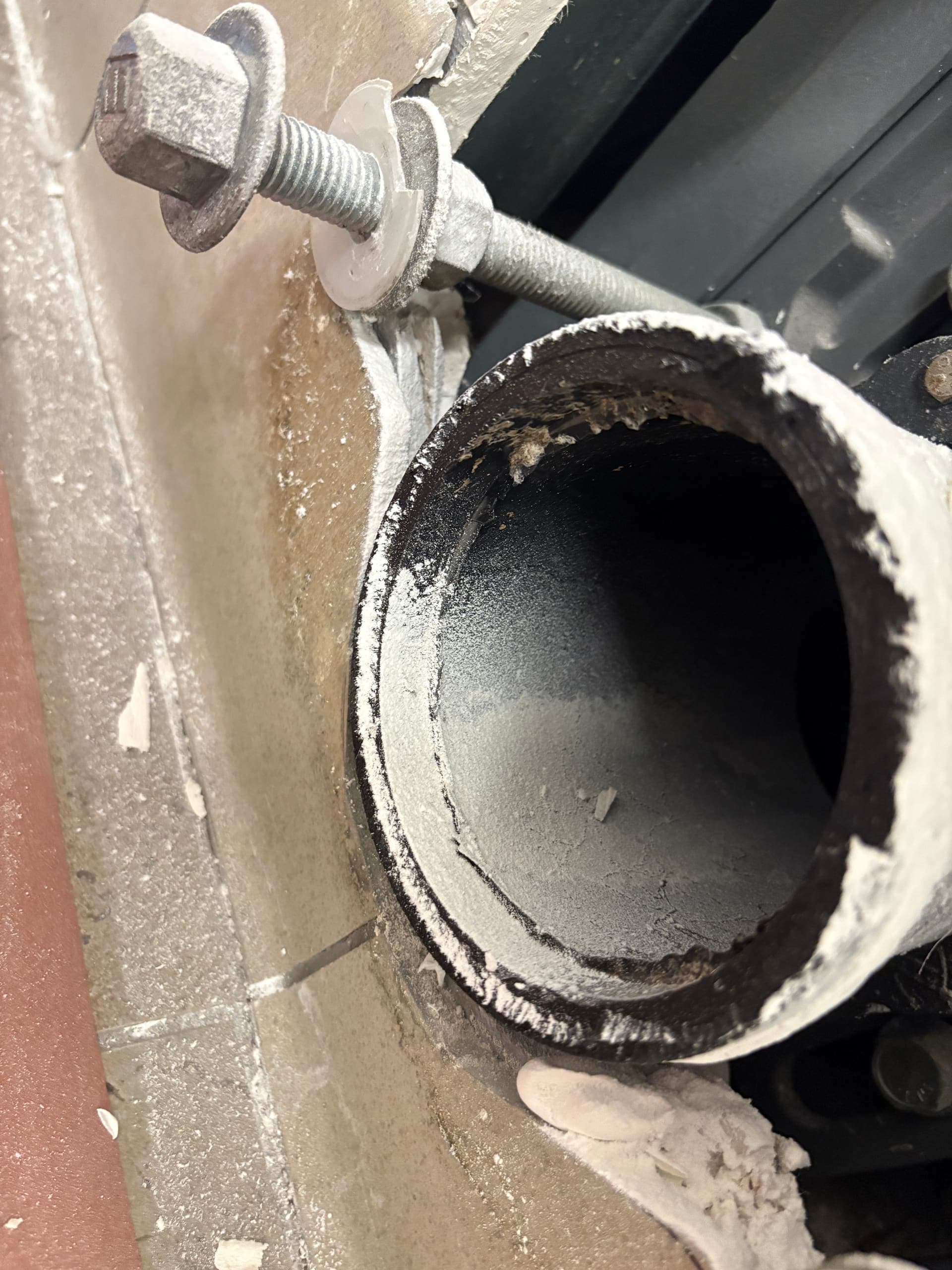
We move fast on extraction, pulling standing water out before it migrates further. Then moisture meters and thermal imaging show us where it hid (inside walls, under cabinets, beneath the flooring), so the drying plan covers everywhere the water traveled.
Air movers and LGR dehumidifiers take the structure down to IICRC S500 targets while we record daily readings until the meters say done. At the end you have a clean, stabilized space, and your plumber's pipe repair and any rebuild can follow.
Your Claim
When insurance covers it
A burst pipe is close to the textbook example of a sudden, accidental water loss, so this kind of damage is commonly covered. Carriers generally look at whether the failure was abrupt rather than a slow, known drip.
Where claims get contested is gradual leakage or a line the homeowner let go un-maintained. We can't promise an outcome, but we document the burst, the water's path, and every drying reading, then work directly with your adjuster to back the claim.
Prevention
How to Prevent Burst Pipes
Most burst pipes we respond to involve unprotected lines in cold snaps, aging rubber appliance hoses, or excessive pressure. Insulating exposed pipe, upgrading to braided stainless hoses, regulating pressure, and shutting off the main before travel prevent nearly all of them.
- Insulate exposed pipe before the first freeze warning. Garage, attic, and exterior-wall lines are the first to fail in a valley cold snap.
- Replace rubber appliance hoses every five years. Braided stainless washing-machine hoses greatly reduce the most common household burst we see.
- Verify the pressure regulator is working. Sustained pressure above 60 psi fatigues joints until one fails.
- Shut off the main before extended travel. Close the valve and open one faucet to relieve pressure whenever the house sits empty more than a few days.
Questions
Burst Pipe, frequently asked
The water stopped, do I still need drying?
Yes. Water wicks into drywall, subfloor, and framing you can't see, and mold can begin within 24 to 48 hours on wet materials. Surface mopping doesn't reach the moisture trapped inside the structure.
Is it safe to walk through the flooded room?
Only if water is nowhere near outlets, appliances, or the electrical panel. If it is, shut off those circuits at the breaker first, and if the panel itself is wet, stay out and call for help.
How long will the drying take?
For most burst-pipe losses, structural drying runs about three to five days. It depends on how far the water spread and how saturated things are; we verify dry with meter readings, not the calendar.
Get Help Now
Request a free inspection
The Service That Handles This
Where We See It
Related Guides
24/7 Emergency Response
Damage won't wait. Neither do we.
Call now for a free inspection and 24/7 response across Hemet and Riverside County. We handle the cleanup and deal with your insurer.