Damage Guides · Mold
Can I clean mold myself, or do I need a pro?
For a small surface patch, careful DIY can be fine, but past roughly 10 square feet, or when it's in the HVAC or a wall cavity, it's a job for containment and a pro.
- IICRC Certified #70193059
- CSLB #1114551
- Hemet-based
- Serving all of Riverside County
What You're Noticing
The signs
- A small, contained spot on a hard surface, grout, tile, or a painted trim edge.
- Or a patch bigger than a couple of square feet, or several spots scattered around one room.
- Mold on porous material (drywall, insulation, carpet) rather than a wipeable surface.
- A musty smell, or growth near a vent or return, hinting it's in the HVAC.
- Growth that keeps coming back after you clean it, pointing to a moisture source behind it.
What's Actually Happening
The cause
Not all mold is a remediation job. The EPA's guidance for homeowners uses a rough rule of thumb: a mold area under about 10 square feet, a patch smaller than a bath towel, on a hard surface, is generally something a homeowner can clean themselves with the right precautions.
Past that size, or once mold is in porous materials, the HVAC, or inside a wall cavity, it stops being a DIY job. Disturbing a larger area sends spores through the house, and cleaning the surface without addressing the moisture and the growth behind it just guarantees it returns. That's where containment, HEPA filtration, and finding the water source matter.
Do This Now
Do this in the next 30 minutes
A few careful moves protect your safety and limit the damage. If a step isn’t safe, skip it and call us.
- 1
Size up the job
Measure the growth. A patch under about 10 square feet on a hard, non-porous surface, with no musty smell or hidden growth, may be a DIY clean. Bigger, porous, or smelly means call.
- 2
Fix the moisture first
Mold is a moisture problem. Find and stop the water (a drip, condensation, a leak) before you clean, or it comes right back no matter who does the work.
- 3
Protect yourself for a small clean
For a DIY-sized spot, wear an N95, gloves, and eye protection, keep the door closed, and don't dry-scrape it. Ventilate to the outside, not into the rest of the house.
- 4
Know when to stop and call
If you open it up and it's bigger than it looked, in the wall cavity, or into insulation, stop. That's the point where a pro and containment keep it from spreading.
Avoid These Mistakes
Don't do this
These are the moves that turn a manageable loss into a bigger, costlier one.
- Don't tackle a large area (past ~10 sq ft) or wall-cavity mold as a weekend project; that's when it spreads.
- Don't clean mold in or around the HVAC yourself; the system will carry spores through the whole house.
- Don't skip fixing the moisture source; a spotless-looking clean fails within weeks if the water's still there.
- Don't use bleach on porous drywall and assume it's solved; it leaves the roots and the moisture behind.
Not sure if that mold is a DIY job?
We will look at how big it is, what it is growing on, and where the water came from, and tell you whether you need us. Call any time.
How We Handle It
What we do when we arrive
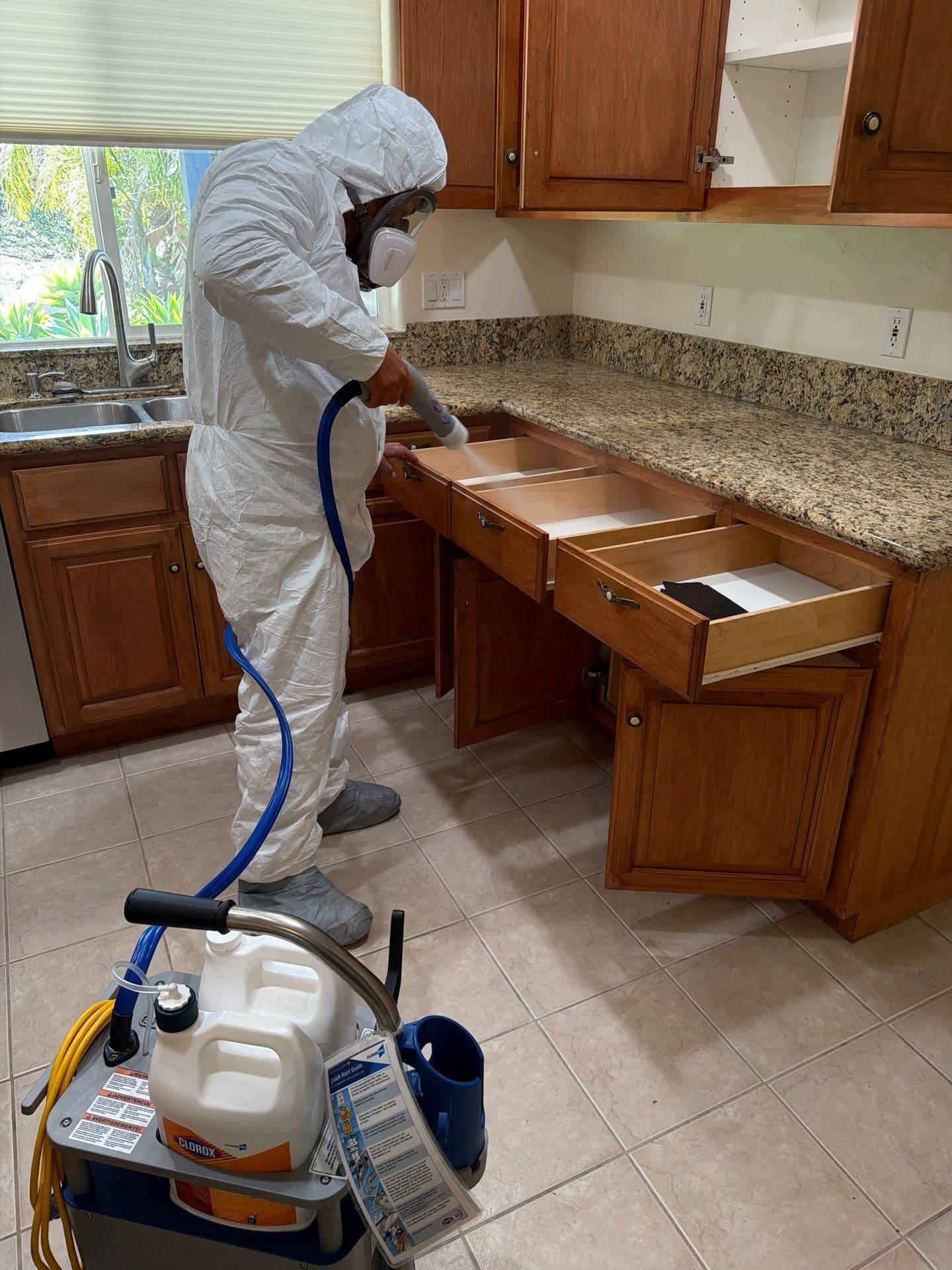
When it's past the DIY line, we contain the work area with barriers and negative air pressure so nothing spreads, run HEPA air scrubbers, and remove affected porous materials rather than surface-cleaning them.
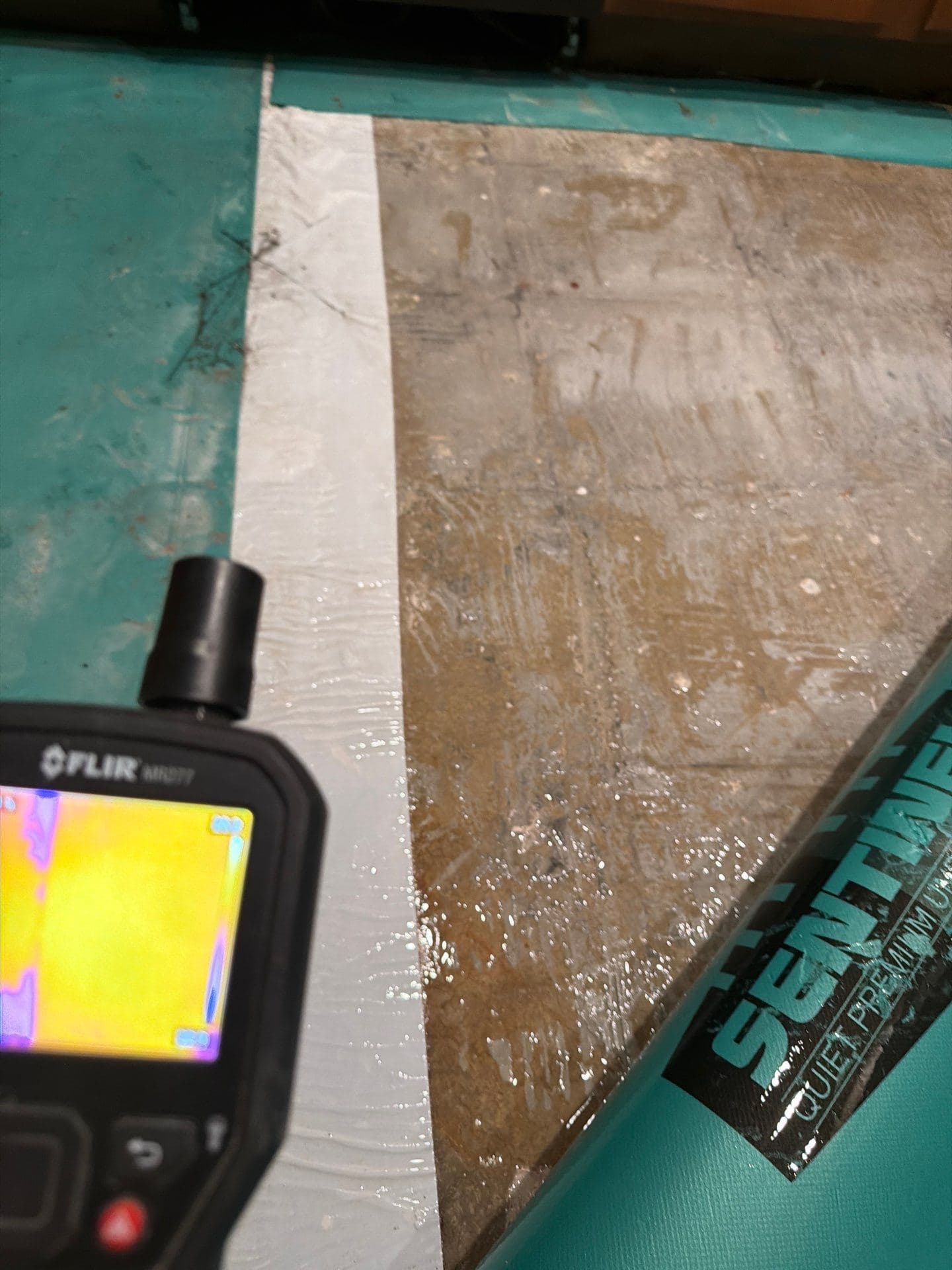
And because mold follows water, we track down the moisture source and dry the area to verified targets so it doesn't return. If you're not sure which side of the line you're on, we'll take a look and tell you. Sometimes the answer really is that it's small enough to handle yourself.
Your Claim
When insurance covers it
Whether mold cleanup is covered usually traces back to what caused the water. Mold from a sudden, covered loss, a burst pipe dried too late, is often included; mold from long-term humidity or a known, un-maintained leak is frequently excluded or capped.
We can't decide your claim, but if it stems from a covered event we document the source and scope for your adjuster. And if it's a small DIY job with no claim at all, we'll tell you that too.
Prevention
How to Clean a Small Mold Patch Safely
A patch under roughly ten square feet on a hard surface can be a homeowner job when done correctly: the moisture source stopped first, no dry scraping or brushing, detergent rather than bleach on porous materials, and debris sealed in a bag at the source.
- Stop the moisture before cleaning. Mold on a still-damp surface returns within days regardless of the cleaner used.
- Never dry-scrape or dry-brush growth. Dry disturbance is the fastest way to put spores into the room's air.
- Skip bleach on drywall and wood. It whitens the surface while roots survive in the material; detergent and thorough drying outperform it.
- Bag debris where you clean it. Sealing waste at the source keeps spores from spreading through the house.
Questions
DIY Mold or Call a Pro, frequently asked
How much mold can I clean myself?
The EPA's rule of thumb for homeowners is roughly 10 square feet, about the size of a bath towel, on a hard, non-porous surface, with the moisture source fixed. Larger areas, porous materials, or HVAC involvement call for a pro with containment.
Why does mold matter more in the HVAC or a wall?
Because those spread it. Mold in the HVAC gets blown through every room, and growth in a wall cavity is fed by hidden moisture and is usually bigger than it looks. Both need containment so cleaning doesn't scatter spores through the house.
Is bleach enough for a small spot?
On a hard, non-porous surface a small spot can be cleaned, but bleach doesn't work on porous drywall; it leaves the roots in the board and ignores the moisture. Fixing the water source is what keeps it from returning.
Get Help Now
Request a free inspection
The Service That Handles This
Where We See It
Related Guides
24/7 Emergency Response
Damage won't wait. Neither do we.
Call now for a free inspection and 24/7 response across Hemet and Riverside County. We handle the cleanup and deal with your insurer.