Damage Guides · Mold
My drywall got wet and now there's mold, what do I do?
Drywall that stayed wet has started to grow mold; a musty smell and dark spots mean the moisture sat too long.
- IICRC Certified #70193059
- CSLB #1114551
- Hemet-based
- Serving all of Riverside County
What You're Noticing
The signs
- A musty, earthy smell, often the first sign, before anything is visible.
- Dark speckling, fuzzy patches, or discolored blooms on the drywall.
- Paint that's blistered, or a wall that feels soft or crumbly where it stayed damp.
- Allergy-type symptoms that flare in that room and ease when you leave.
What's Actually Happening
The cause
Drywall is paper and gypsum, and mold treats damp paper as food. Give it moisture and a little time and spores colonize the board and the framing behind it.
This is a timing problem. On materials that stay wet, mold can begin to grow within 24 to 48 hours, so drywall that wasn't dried out fast after a leak or flood is exactly where it takes hold. What shows on the painted side is usually smaller than what's growing on the back of the board inside the wall cavity.
Do This Now
Do this in the next 30 minutes
A few careful moves protect your safety and limit the damage. If a step isn’t safe, skip it and call us.
- 1
Don't disturb or scrub the mold
Sanding, brushing, or dry-scraping moldy drywall throws spores into the air and spreads them through the house. Leave it alone until it can be contained.
- 2
Find and stop the moisture source
Mold is a moisture problem first. If there's an active leak feeding the wet drywall, shut off that water so you're not fighting a moving target.
- 3
Close the door and limit airflow to the area
Shut the room off and don't run a fan or the HVAC blowing across the growth; that just carries spores elsewhere. Keep the space isolated until it's handled.
- 4
Photograph the spots and the source
Take photos of the growth, the wet drywall, and whatever leak caused it. That documentation supports both the remediation plan and your claim.
Avoid These Mistakes
Don't do this
These are the moves that turn a manageable loss into a bigger, costlier one.
- Don't wipe it down with bleach; the growth survives inside the porous board with the moisture still feeding it.
- Don't sand, brush, or dry-scrape it; that throws spores through the whole house.
- Don't run the HVAC or a fan across the growth; it carries spores into clean rooms and the ductwork.
- Don't cut into the wall without containment just to "see how bad it is."
Found mold on the drywall? Don't disturb it.
Cutting or bleaching it spreads spores. Call and we'll contain it, remove it to standard, and fix the moisture.
How We Handle It
What we do when we arrive
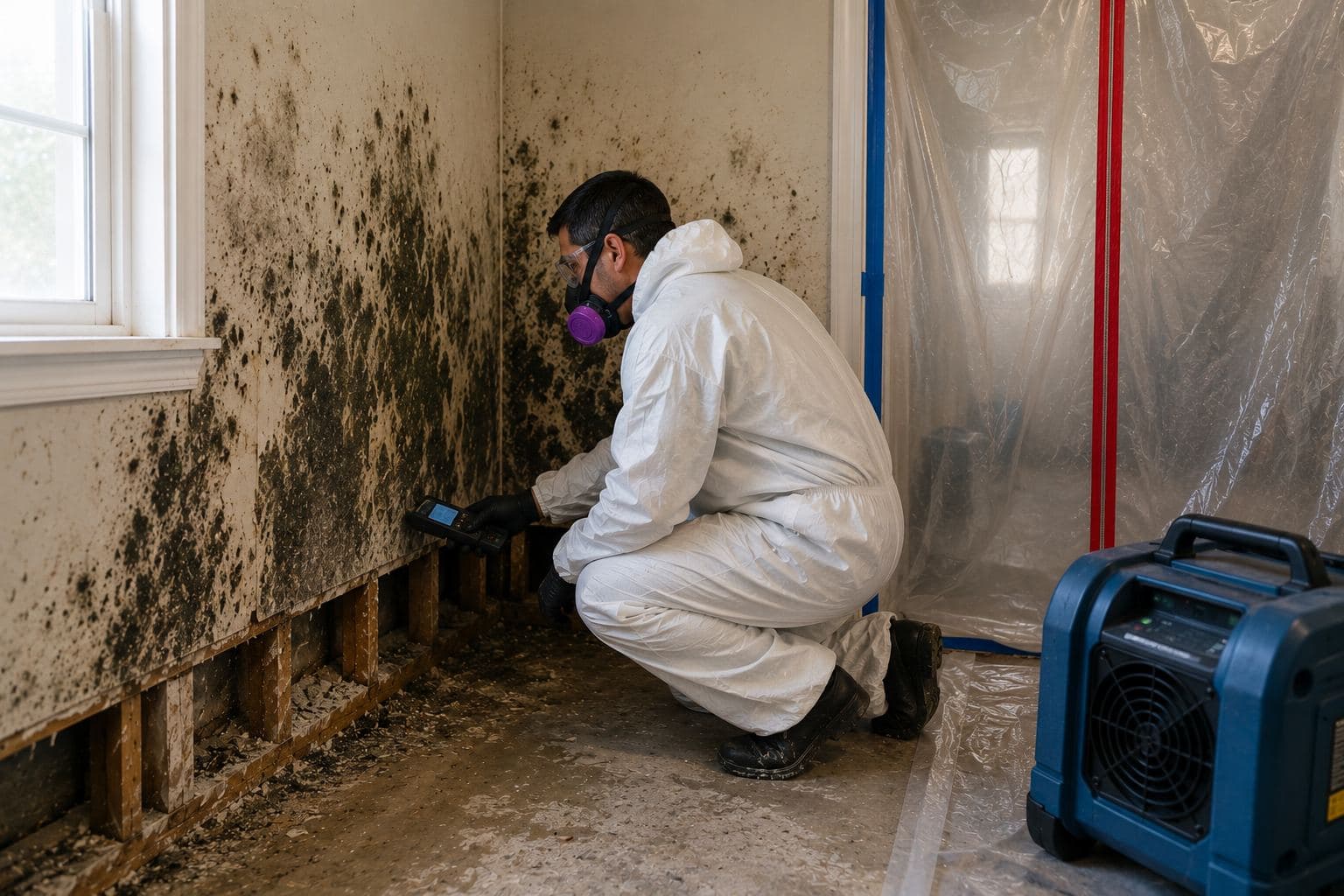
We seal the work area with containment and negative air pressure so spores can't spread while we work, and HEPA air scrubbers pull them out of the air. Then the affected drywall and any unsalvageable material comes out, and surfaces are treated to IICRC standards.
Because mold is a symptom of moisture, we don't stop at removal. We find and address the water source, then dry the cavity and framing to verified targets with air movers and dehumidifiers and daily documented readings. You are left with a dry, treated cavity ready for the rebuild.
Your Claim
When insurance covers it
When mold grows out of a sudden, covered water loss, a burst pipe or a failed supply line that wasn't dried in time, remediation is often included as part of that claim. The original cause of the water matters here.
Mold from long-term seepage, humidity, or a leak the homeowner knew about and left un-maintained is frequently excluded or capped. We can't guarantee how your carrier rules, but we document the source and the scope and work with your adjuster to support the claim.
Prevention
How to Keep Wet Drywall from Turning into Mold
Drywall that stays wet past 48 hours becomes a mold substrate. Fast professional drying, air movement across every wet edge, no paint over damp board, and verified final moisture readings are what keep a routine water loss from becoming a remediation project.
- Start drying within 48 hours. That window is the difference between structural drying and mold remediation.
- Open cabinet doors and lift furniture off wet floors. Air must reach every wet edge or the cavity keeps feeding moisture back.
- Never paint or texture over damp drywall. Sealed-in moisture is how a minor stain becomes a hidden colony.
- Require final meter readings. Dry is a measured value against the material's standard, not an appearance.
Questions
Wet Drywall & Mold, frequently asked
How fast does mold grow on wet drywall?
Fast. On materials that stay wet, mold can start within 24 to 48 hours. That's why drywall soaked in a leak or flood needs to be dried right away, or it becomes a remediation job.
Can I just cut out the moldy part myself?
Cutting into it without containment sends spores through the house. Proper remediation seals the area, runs HEPA air filtration, removes affected material to IICRC standards, and fixes the moisture so it doesn't come back.
Will bleach take care of it?
Surface bleaching often leaves growth in the porous board and the framing behind it, and doesn't touch the moisture feeding it, so it returns. Contained removal plus fixing the water source is what resolves it.
Get Help Now
Request a free inspection
The Service That Handles This
Where We See It
Related Guides
24/7 Emergency Response
Damage won't wait. Neither do we.
Call now for a free inspection and 24/7 response across Hemet and Riverside County. We handle the cleanup and deal with your insurer.