

Damage Guides · Water
What are the signs of a slab leak, and what do I do?
A supply line under the concrete has failed, and the water is wicking up through the slab into your floors and walls.
- IICRC Certified #70193059
- CSLB #1114551
- Hemet-based
- Serving all of Riverside County
What You're Noticing
The signs
- A warm patch on the floor you can feel through a sock or bare feet.
- A section of flooring or carpet that stays damp and never fully dries.
- The sound of water running somewhere in the house with every faucet and toilet shut off.
- A water bill that jumped this month with nothing to explain it.
- Baseboards that look swollen or feel spongy near the floor.
- A faint musty smell building in one room or a closet.
What's Actually Happening
The cause
Homes built on a concrete slab run their supply lines through or under that slab. Over the years, copper and galvanized pipe corrodes, shifts with the soil, and rubs against the concrete until a pinhole or split opens up.
The leak sits under the concrete, so the water usually shows up far from where the pipe broke. By the time a stain reaches the surface, moisture has often traveled across a wide part of the slab, which is why the warm spot and the damp carpet are rarely in the same place.
Do This Now
Do this in the next 30 minutes
A few careful moves protect your safety and limit the damage. If a step isn’t safe, skip it and call us.
- 1
Shut off the main water valve
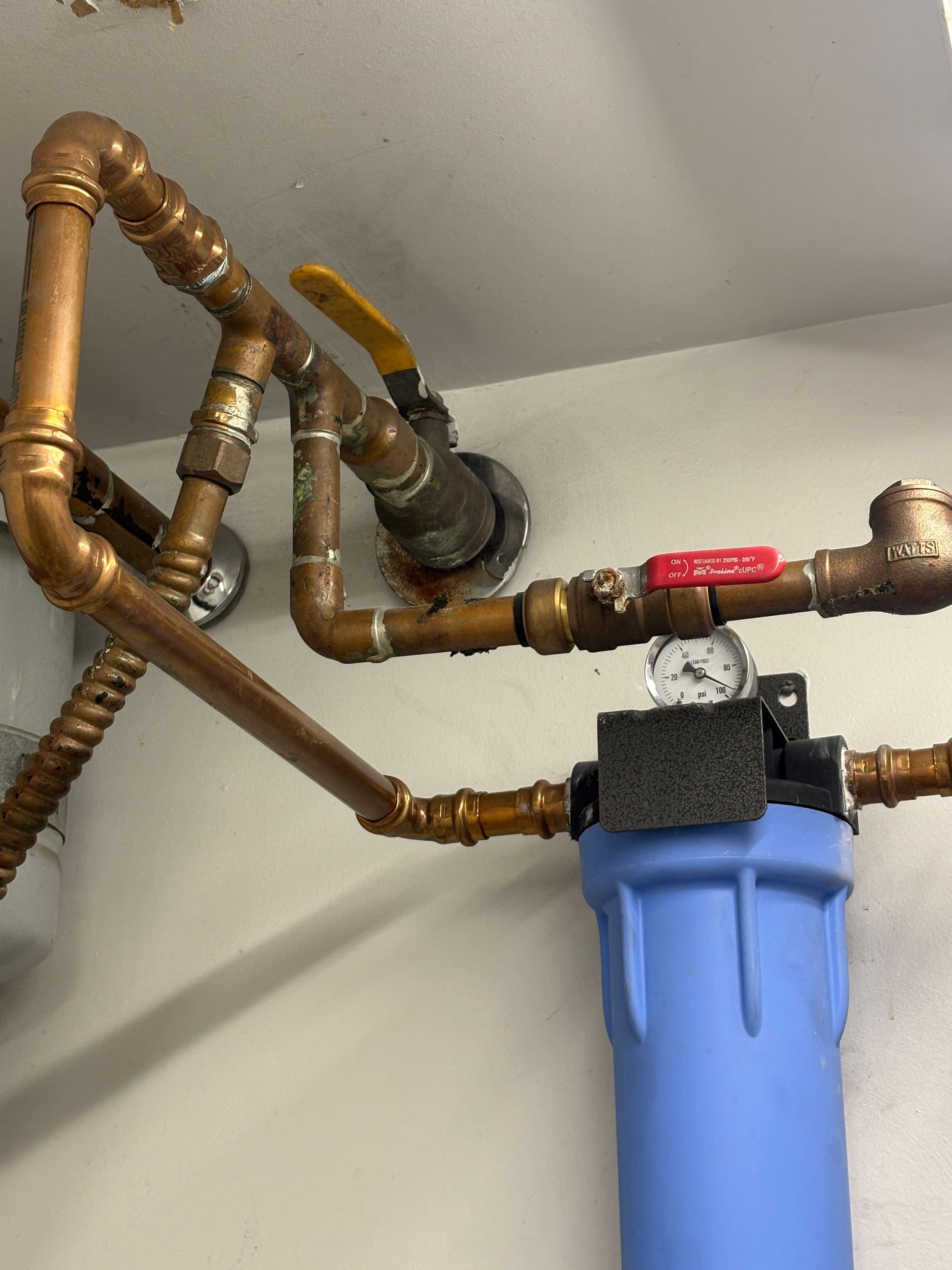
Close the main shutoff at the house or the street to stop more water from feeding the leak. You can still flush the toilet and use stored water, but the slab stops taking on more.
- 2
Turn off the water heater
With the water off, the water heater can run dry and damage its element. Switch off its gas valve or breaker until the leak is handled.
- 3
Move what you can off the floor
Lift rugs, boxes, and furniture off any damp flooring so they don't wick moisture or stain. Don't lay a soaked rug back down on hardwood. It traps water and warps the wood.
- 4
Photograph everything before you touch it
Take clear photos and a short video of the wet floor, baseboards, and any belongings. Good documentation up front makes the insurance claim far smoother.
Avoid These Mistakes
Don't do this
These are the moves that turn a manageable loss into a bigger, costlier one.
- Don't ignore a climbing water bill. Under a slab it's often the only early warning you get.
- Don't lay a soaked rug back over hardwood; it traps water against the boards and cups them.
- Don't rent a box fan and call it dry. Surface air never reaches water inside the slab and walls.
- Don't wait for the floor to "dry on its own." Mold can start within 24 to 48 hours while it sits.
- Don't jackhammer the slab chasing the leak yourself. Locating it is the plumber's job, and blind demolition usually opens the wrong spot.
Think you have a slab leak? Don't wait it out.
Every hour the water keeps moving through the slab. Call and we'll map it and start drying today.
How We Handle It
What we do when we arrive
First we confirm the leak and map how far the water spread. Moisture meters and thermal imaging let us see the wet path through the slab and into walls and cabinets, so we're drying the whole affected area instead of guessing at the surface.
Then we dry it properly. Air movers and LGR dehumidifiers pull moisture out to the verified targets used in IICRC S500 structural drying, and we log readings every day until the structure reads dry. You get back a clean, stable space that's ready for the plumber's repair and your rebuild contractor.
Your Claim
When insurance covers it
Most policies treat a sudden, accidental supply-line failure as a covered water loss, including the tear-out it takes to reach the pipe. The repair to the pipe itself is often a separate question from the water damage it caused.
What carriers tend to push back on is long-term seepage: a leak that dripped for months or a line that went un-maintained. We can't promise how your carrier will rule, but we document the loss thoroughly with photos and daily readings and work directly with your adjuster to support the claim.
Prevention
How to Prevent Slab Leaks
Slab leaks in Hemet-area homes usually trace to high water pressure, corrosive hard water, and aging supply lines. Keeping pressure between 40 and 60 psi, monitoring your water bill, and having original plumbing assessed before it fails prevents most of the slab leaks we respond to.
- Keep water pressure between 40 and 60 psi. An inexpensive gauge threads onto any hose bib. Pressure above 60 psi stresses every fitting and joint under the slab.
- Watch your water bill. An unexplained increase of even 20 percent is often the first measurable sign of a hidden supply-line leak.
- Know your main shutoff location. In most local homes it is at the street-side meter box, or on the inside wall near the front hose bib. Find it now, because minutes matter once a line fails.
- Have original plumbing assessed. Galvanized and thin-wall copper lines corrode from the inside in hard water. A plumbing assessment costs far less than a slab leak.
Questions
Slab Leak, frequently asked
How fast can a slab leak cause real damage?
Quickly. Once materials stay wet, mold can start to grow within 24 to 48 hours, and flooring and baseboards begin to swell. The sooner we map and dry it, the less it spreads.
Do you have to jackhammer my floor?
Not to dry it. We dry the slab and surrounding structure with air movers and dehumidifiers to IICRC S500 targets. Any concrete opening to reach the pipe is the plumber's repair, which we help coordinate.
How long does drying a slab leak take?
Structural drying commonly runs about three to five days, depending on how far the water traveled and how saturated the materials are. We verify with meter readings rather than a guess before we call it dry.
Get Help Now
Request a free inspection
The Service That Handles This
Where We See It
Related Guides
24/7 Emergency Response
Damage won't wait. Neither do we.
Call now for a free inspection and 24/7 response across Hemet and Riverside County. We handle the cleanup and deal with your insurer.