
Damage Guides · Water
My water heater is leaking, is the floor ruined?
A leaking or failed water heater can flood a room fast, but caught early, the floor and structure can usually be dried and saved.
- IICRC Certified #70193059
- CSLB #1114551
- Hemet-based
- Serving all of Riverside County
What You're Noticing
The signs
- A puddle spreading from the base of the tank, or water tracking across the garage or closet floor.
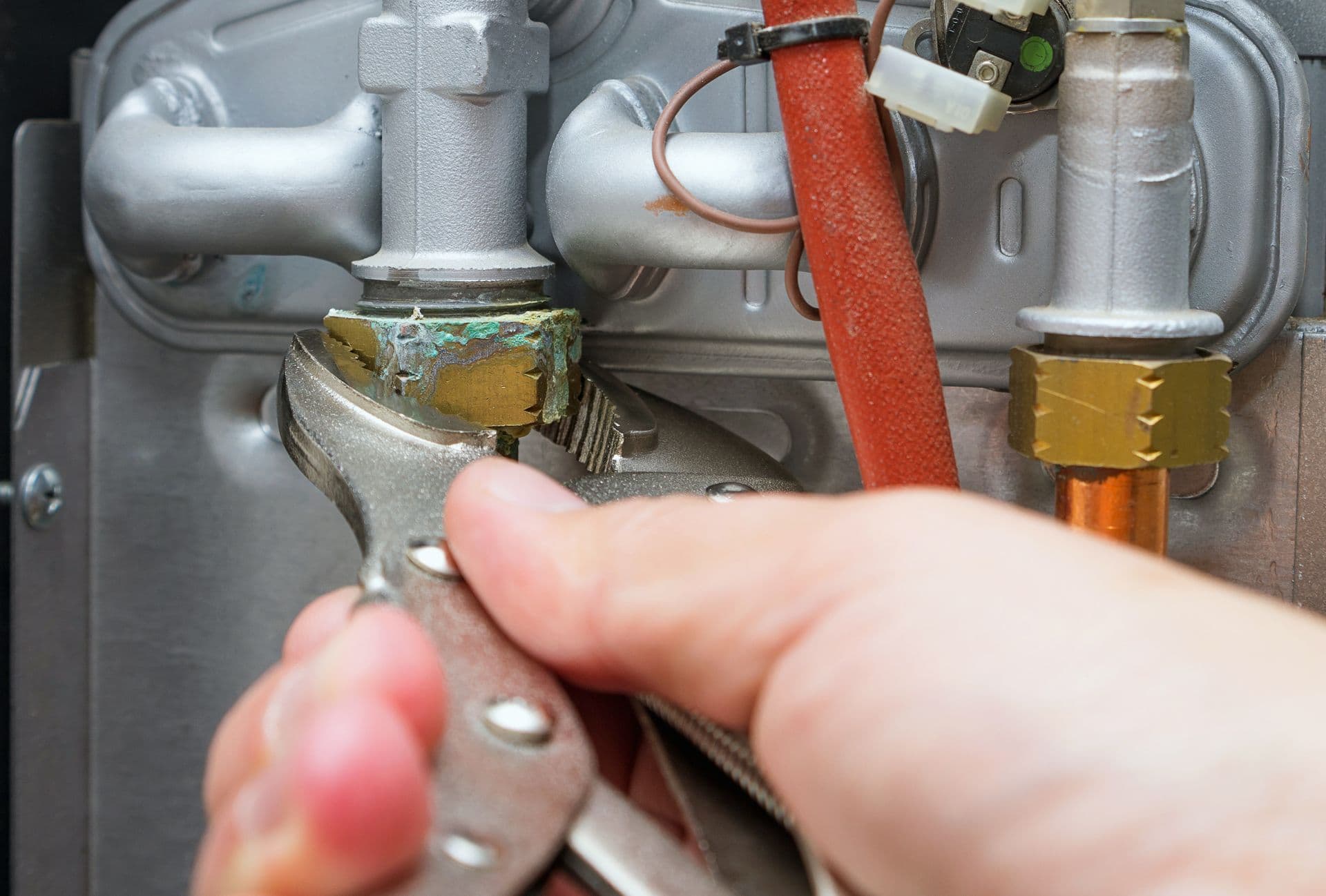
- Rusty streaks down the tank, or a corroded, weeping fitting at the top.
- A hissing or dripping sound near the temperature-and-pressure valve.
- Warm, damp flooring in the next room if the heater sits on a slab.
- A rumbling tank and creeping energy bills in the weeks before it finally goes.
What's Actually Happening
The cause
Water heaters wear out from the inside. Sediment builds in the tank, the steel corrodes, and eventually the tank splits or a fitting fails. When the tank itself goes, it can empty its full capacity and keep refilling until the supply is shut off.
In many valley homes the heater sits in a garage or closet right on the slab, so the water spreads flat and fast into adjoining rooms and up into baseboards and cabinets. The upside: heater losses are usually clean water, and clean water caught early can very often be dried out, so the floor isn't automatically ruined.
Do This Now
Do this in the next 30 minutes
A few careful moves protect your safety and limit the damage. If a step isn’t safe, skip it and call us.
- 1
Shut off the water to the heater
Close the cold-water valve on top of the tank. If it's stuck or you can't find it, close the home's main shutoff to stop the refill.
- 2
Turn off the heater's power or gas
Switch off the breaker for an electric unit, or turn the gas control to "off" for a gas one. A tank running dry can damage the element or overheat.
- 3
Move water away from finished rooms
If it's safe, push the water toward a drain and away from carpet, cabinets, and doorways into living space. Lift anything porous up off the floor.
- 4
Photograph the tank and the spread
Get the leaking tank, the failed fitting, and how far the water traveled before you clean up. That record helps the claim and the plumber.
Avoid These Mistakes
Don't do this
These are the moves that turn a manageable loss into a bigger, costlier one.
- Don't assume the floor is a total loss; clean water dried quickly often saves hardwood, tile, and subfloor.
- Don't relight or re-power a heater that's sitting in water; wait until it's handled.
- Don't leave wet cardboard boxes and stored items sitting in the garage water; they wick it into the walls.
- Don't just fan the surface; water under a slab-set heater spreads into the next room where you can't see it.
Water heater let go? The floor may still be savable.
Clean water dried fast usually saves the structure. Call and we'll trace it and start drying today.
How We Handle It
What we do when we arrive
We stop the spread and read where the water went. Because a slab-set heater pushes water sideways, we use moisture meters and thermal imaging to trace it into adjoining rooms, under cabinets, and up the drywall, then dry the whole path it took, room to room.
Air movers and LGR dehumidifiers bring the flooring and structure back to IICRC S500 targets while we log daily readings until they hit target. In most clean-water cases the floor comes back; we only remove what genuinely can't be dried, leaving you ready for the new heater and any repair.
Your Claim
When insurance covers it
A tank that lets go all at once is the kind of sudden loss policies are written to cover; what matters to a carrier is that the event was abrupt and accidental. Replacing the water heater itself is typically separate from the water damage it caused.
A heater that wept slowly for months, or one well past its life that wasn't maintained, is where a claim can be argued as gradual. We can't guarantee the outcome, but we document the failure and every drying reading to support your adjuster's review.
Prevention
How to Prevent Water Heater Leaks
Most water heater failures come from sediment corrosion, worn anode rods, and age. Annual flushing, a five-year anode inspection, a piped drain pan, and planned replacement at 10 to 12 years prevent the large majority of tank failures we respond to in the San Jacinto Valley.
- Flush the tank annually. Hard valley water deposits sediment that corrodes the tank's bottom seam, the most common failure point.
- Inspect the anode rod at year five. This sacrificial rod corrodes so the tank does not; replacement can double a tank's service life.
- Install a drain pan piped to the exterior. Essential wherever the heater sits above or beside finished living space.
- Plan replacement at 10 to 12 years. Tanks at the end of service life typically fail at the bottom seam with little visible warning.
Questions
Water Heater Leak, frequently asked
Is my floor ruined after a water heater leak?
Not necessarily. Heater leaks are usually clean water, and clean water dried quickly often saves hardwood, tile, and subfloor. The damage depends far more on how long it sat than on how much came out. Fast drying is what saves the floor.
How far does the water really spread?
Farther than the puddle. A heater on a slab pushes water flat into adjoining rooms and up into baseboards and cabinets. We use thermal imaging and meters to find the full wet area, which is often well beyond the garage or closet.
How long will drying take?
For a typical clean heater loss, structural drying runs about three to five days depending on how far it spread and how saturated things are. We confirm dry with meter readings against IICRC S500 targets, not a fixed schedule.
Get Help Now
Request a free inspection
The Service That Handles This
Where We See It
Related Guides
24/7 Emergency Response
Damage won't wait. Neither do we.
Call now for a free inspection and 24/7 response across Hemet and Riverside County. We handle the cleanup and deal with your insurer.