
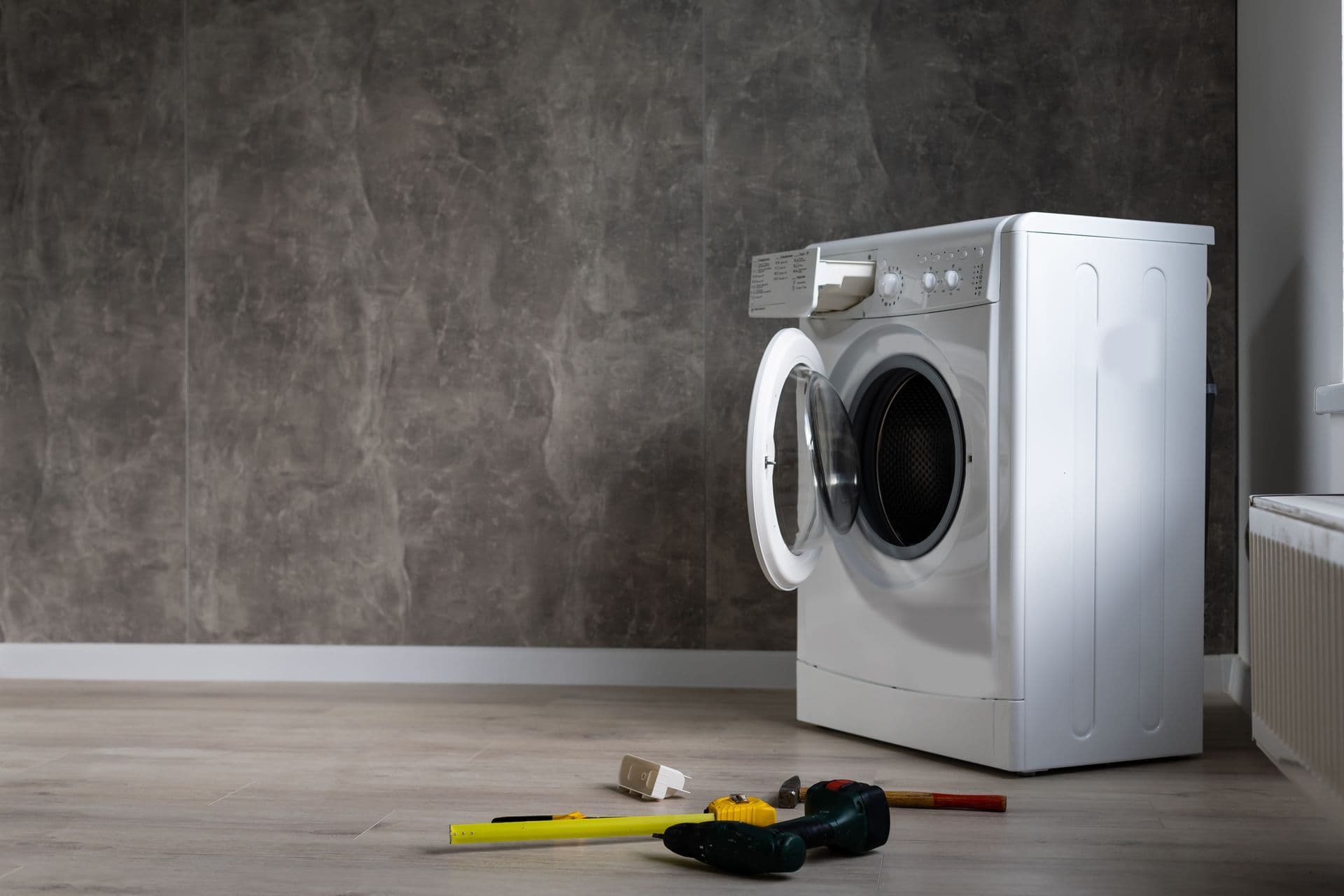
Damage Guides · Water
My washer or dishwasher overflowed, what do I do?
An appliance dumped water across the floor, and even after it "drains away," the subfloor and cabinets underneath usually stay wet.
- IICRC Certified #70193059
- CSLB #1114551
- Hemet-based
- Serving all of Riverside County
What You're Noticing
The signs
- Water fanning out from under the washer, the dishwasher, or the kitchen cabinets.
- A puddle that seems to vanish into the flooring seams while the floor stays cool and damp.
- A warped cabinet toe-kick or a dark line creeping up the drywall behind the appliance.
- A burst or bulging braided supply hose behind the machine.
- A musty smell from the sink-base cabinet or the laundry area a few days later.
What's Actually Happening
The cause
Two things fail here. A braided supply hose or a fitting lets go and sprays water at full pressure, or the appliance overflows from the tub, pump, or door seal during a cycle. Either way, the water heads for the lowest, most hidden path first.
That's why "it drained away" is misleading. The surface water disappears into flooring seams and under the cabinet kick, but it's now sitting on the subfloor and wicking into the cabinet boxes and the base of the drywall. What dried on top is still wet underneath.
Do This Now
Do this in the next 30 minutes
A few careful moves protect your safety and limit the damage. If a step isn’t safe, skip it and call us.
- 1
Shut off the appliance's water supply
Close the hot and cold valves behind the washer, or the supply valve under the sink for a dishwasher. If you can't reach them, close the home's main shutoff.
- 2
Unplug it, carefully
Only if you can reach the plug without standing in water. If the cord or outlet is wet, cut the circuit at the breaker instead and leave the machine alone.
- 3
Pull the appliance out and mop what you can
Slide the washer out or open the dishwasher, mop the standing water, then check behind and under it. The cabinet and wall behind are where the hidden water sits.
- 4
Photograph the hose and the water
Get a clear shot of the failed hose or fitting and the water's spread before cleanup. A burst supply hose is strong support for a claim.
Avoid These Mistakes
Don't do this
These are the moves that turn a manageable loss into a bigger, costlier one.
- Don't mop the top and call it done. The subfloor and cabinet bases are still holding water.
- Don't reconnect a hose that already failed; braided hoses fail at the crimp and do it again.
- Don't close the sink-base or laundry cabinet up to "air out"; trapped moisture there feeds mold fast.
- Don't run the machine again to "test it" before the leak is found and the area is dry.
It "drained away", but your floor is still wet.
The water under the cabinets and subfloor won't dry on its own. Call and we'll map it and dry it right.
How We Handle It
What we do when we arrive
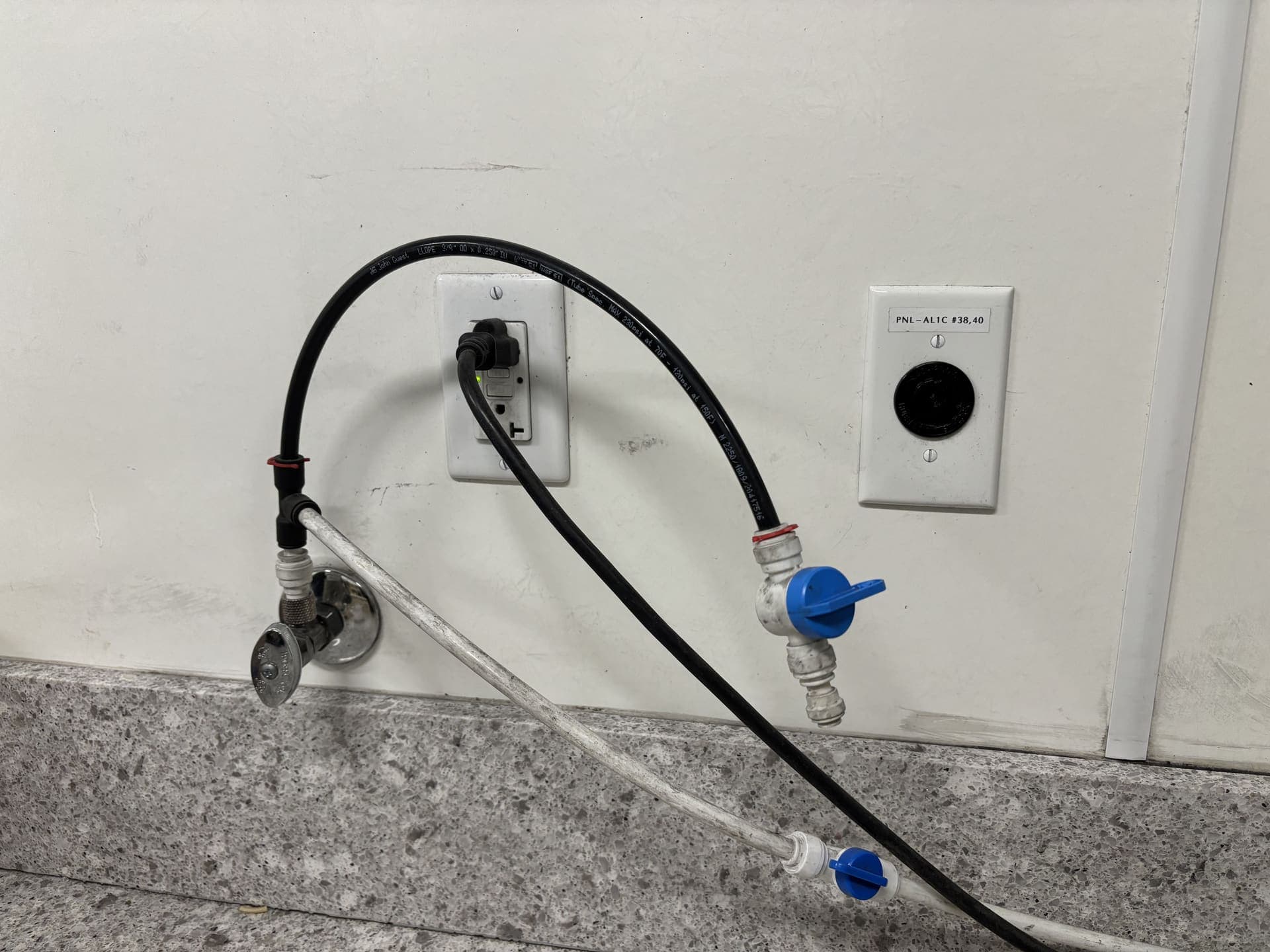
We pull the appliance and read what you can't see. Moisture meters and thermal imaging show whether water got under the flooring, into the cabinet boxes, and up the drywall behind the machine, so we dry the wet zone instead of the visible puddle.
Then we dry it to standard: air movers and dehumidifiers work the wet floor and cabinet cavities down to IICRC S500 targets with a documented reading each day until it's dry. You get back a stable base ready for the plumber's hose fix and any repair.
Your Claim
When insurance covers it
A sudden hose burst or appliance failure usually falls under sudden-and-accidental coverage; how abrupt the failure was is what carriers weigh. The appliance repair itself is usually separate from the water damage it caused.
A slow drip the homeowner knew about, or a hose that visibly wore out un-maintained, is where coverage gets argued as gradual damage. We don't decide the claim, but we document the failed part and every drying reading for your adjuster.
Prevention
How to Prevent Washing Machine and Dishwasher Leaks
Appliance supply lines and door seals fail predictably with age. Braided stainless hoses replaced on schedule, monthly gasket and filter checks, leak sensors beneath each unit, and running appliances only while home prevent the majority of laundry and kitchen floods.
- Upgrade to braided stainless supply hoses. Replace them every five years, or immediately at any sign of bulging or corrosion.
- Run appliances only while home and awake. A hose failure caught in minutes is a mop-up; the same failure overnight is a structural dry-out.
- Clean the dishwasher filter and check gaskets monthly. Debris in the filter forces water past the door seal.
- Place a leak sensor beneath each appliance. An inexpensive alarm converts a hidden leak into an immediate notification.
Questions
Washer & Dishwasher Overflow, frequently asked
The water's gone, do I really need it dried?
Almost always, yes. Appliance overflows run under flooring and into cabinet bases where surface mopping never reaches. Materials that stay wet can grow mold within 24 to 48 hours, so the hidden moisture is the part that matters.
Why did the supply hose burst?
Braided steel washer hoses fail at the crimped ends as they age, and they let go under full house pressure. Replacing both hoses when one fails, and after several years regardless, is the usual fix; a plumber handles that part.
Is dishwasher water contaminated?
A clean-supply overflow is low-risk. If the dishwasher backed up with drain water or food waste, it's treated as more contaminated and gets cleaned and sanitized before it's dried. We classify it before we start.
Get Help Now
Request a free inspection
The Service That Handles This
Where We See It
Related Guides
24/7 Emergency Response
Damage won't wait. Neither do we.
Call now for a free inspection and 24/7 response across Hemet and Riverside County. We handle the cleanup and deal with your insurer.