Damage Guides · Fire & Smoke
I had a small kitchen fire, what do I do now?
Once it's safely out, the soot and smoke are the next problem, and the worst thing you can do is start wiping it off before it's handled right.
- IICRC Certified #70193059
- CSLB #1114551
- Hemet-based
- Serving all of Riverside County
What You're Noticing
The signs
- A greasy, yellowish-brown film on cabinets, walls, and the ceiling above the stove.
- A sharp, lingering burnt smell that clings to everything nearby.
- Soot that smears and spreads when you touch it instead of wiping clean.
- A haze or residue in rooms well beyond the kitchen.
- Blistered paint or discolored finishes on and around the appliances.
What's Actually Happening
The cause
Even a fire that's out in seconds leaves a residue problem. Kitchen and cooking fires often produce protein smoke, the near-invisible, greasy, strong-smelling residue from burned food and oil. It's thin, it spreads far, and it bonds to surfaces as it cools, which is why the smell hangs on long after the flames are gone.
Fire residue is also acidic. Left on surfaces, soot etches and stains within days, discoloring cabinets, clouding glass, and corroding metal and appliance finishes. And smoke travels: it rides warm air into rooms the fire never touched and settles there, so the problem is usually bigger than the scorch mark on the wall.
Do This Now
Do this in the next 30 minutes
A few careful moves protect your safety and limit the damage. If a step isn’t safe, skip it and call us.
- 1
Make sure it's fully out and the air is safe
Confirm the fire is completely out and there's no gas leak. If there's heavy smoke or any doubt, get everyone out and let the fire department clear the space before you go back in.
- 2
Ventilate to the outside
Open windows and exterior doors to air out the smoke. Don't push it deeper into the house; move it out.
- 3
Turn the HVAC off
Shut down heating and air conditioning so it stops pulling smoke and soot through the ducts into clean rooms. Leave it off until the system can be checked.
- 4
Photograph everything before you clean
Capture the soot, the residue on surfaces, and the damaged items from several angles. This is the record your claim will lean on.
Avoid These Mistakes
Don't do this
These are the moves that turn a manageable loss into a bigger, costlier one.
- Don't wipe or scrub the soot; dragging it smears the acidic residue in and stains the surface permanently.
- Don't run the HVAC; it spreads soot and smoke through the ducts into rooms the fire never reached.
- Don't mask the smell with air fresheners; protein-smoke odor comes back until the residue is removed.
- Don't throw out damaged items before they're photographed and logged for the claim.
Kitchen fire's out. Don't touch the soot yet.
Wiping it sets the stain and the smell. Call and we'll clean it properly and clear the odor.
How We Handle It
What we do when we arrive
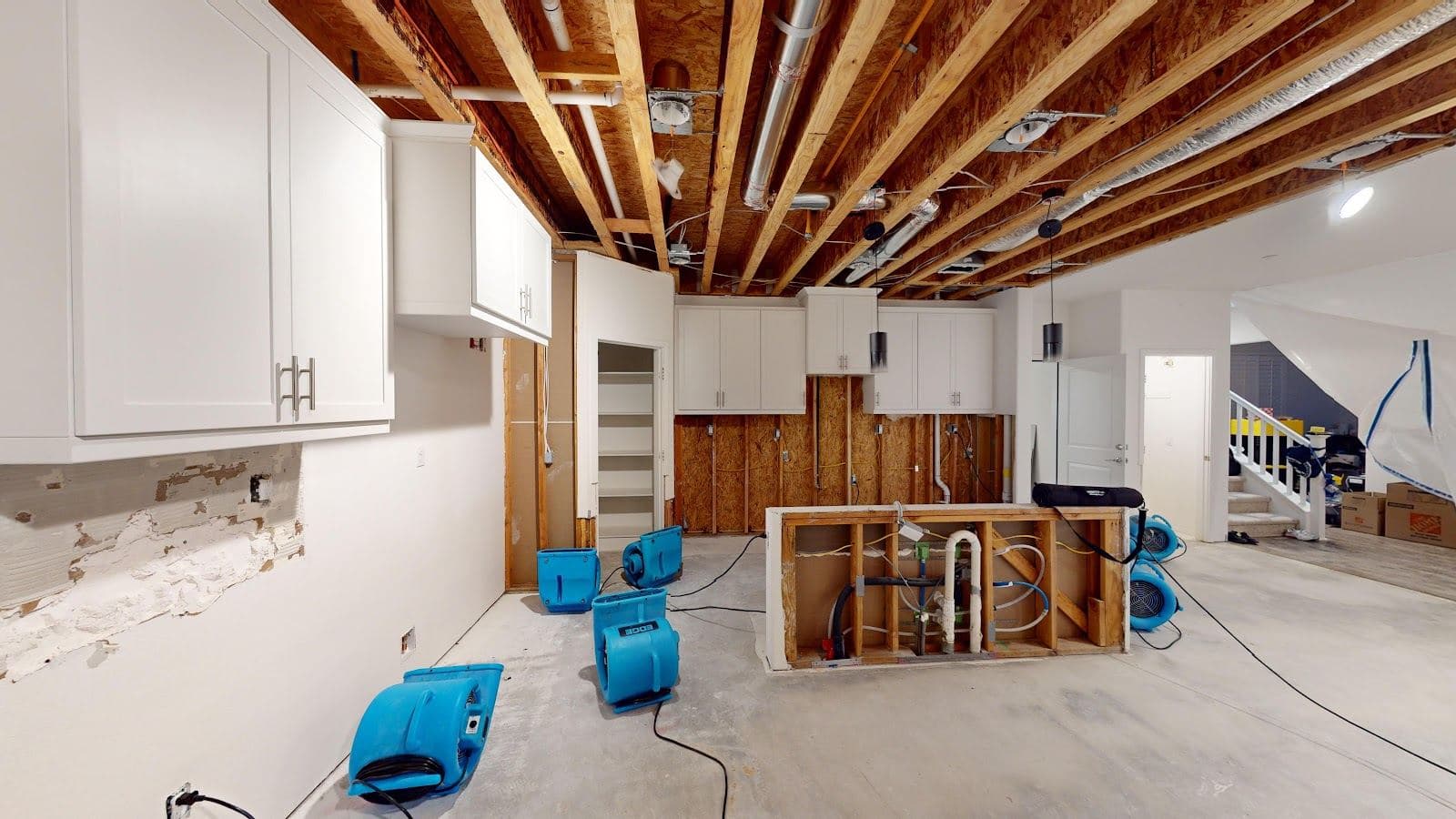
We clean soot before it sets, matching the method to each surface (dry-sponging, specialized cleaners, or careful hand-cleaning), because using the wrong one grinds the residue in. We work the affected area and follow the smoke into the rooms it reached.
Then we deal with the odor at the source. Protein smoke is stubborn, so we clean the residue that holds the smell and use HEPA air scrubbing and deodorization to neutralize it rather than cover it. Resolve handles the mitigation and cleanup; if any rebuilding is needed, we help coordinate the handoff.
Your Claim
When insurance covers it
A fire claim usually covers both the cleanup and the damaged contents, and a sudden accidental cooking fire is commonly a covered event. The more thoroughly the loss is documented, the smoother that goes.
We can't decide your claim, but we photograph the soot, the affected rooms, and the damaged items, and put the full scope in front of your adjuster directly.
Prevention
How to Prevent Kitchen Fires
Cooking is the leading cause of home fires nationally. A lid within reach whenever oil heats, a mounted ABC extinguisher, never moving or watering a grease fire, and quarterly hood degreasing prevent most of the kitchen fires we are called to clean up after.
- Keep a lid within reach whenever oil heats. Sliding a lid over a pan fire smothers it faster and more safely than any spray.
- Mount an ABC extinguisher in the kitchen. Position it where it can be reached without crossing the stove.
- Never move or throw water on a grease fire. Both spread burning oil instantly; smother it or extinguish in place.
- Degrease the hood and filter quarterly. Accumulated grease above the burners is a significant fire accelerant.
Questions
Small Kitchen Fire, frequently asked
Why shouldn't I just wipe the soot off?
Because soot is acidic and greasy, and wiping grinds it into the surface, staining it permanently and spreading it. Different materials need different cleaning methods, and the wrong move makes it worse. Better to leave it until it's cleaned correctly.
The fire was tiny, why does the whole house smell?
Cooking fires often produce protein smoke, a thin, greasy, strong-smelling residue that spreads far and bonds to surfaces. It rides warm air and the HVAC into rooms the fire never touched, so the smell shows up well beyond the kitchen.
Do you rebuild the kitchen?
We focus on mitigation and cleanup, removing soot, cleaning contents, and neutralizing odor to return the space to a clean, safe condition. If cabinetry or structural rebuilding is needed, we help coordinate that next step.
Get Help Now
Request a free inspection
The Service That Handles This
Where We See It
Related Guides
24/7 Emergency Response
Damage won't wait. Neither do we.
Call now for a free inspection and 24/7 response across Hemet and Riverside County. We handle the cleanup and deal with your insurer.